Canicross Gear: What to Wear in the UK (Safety & Comfort)
As an Amazon Associate we earn from qualifying purchases. This page contains affiliate links — if you buy through them, we earn a small commission at no extra cost to you.
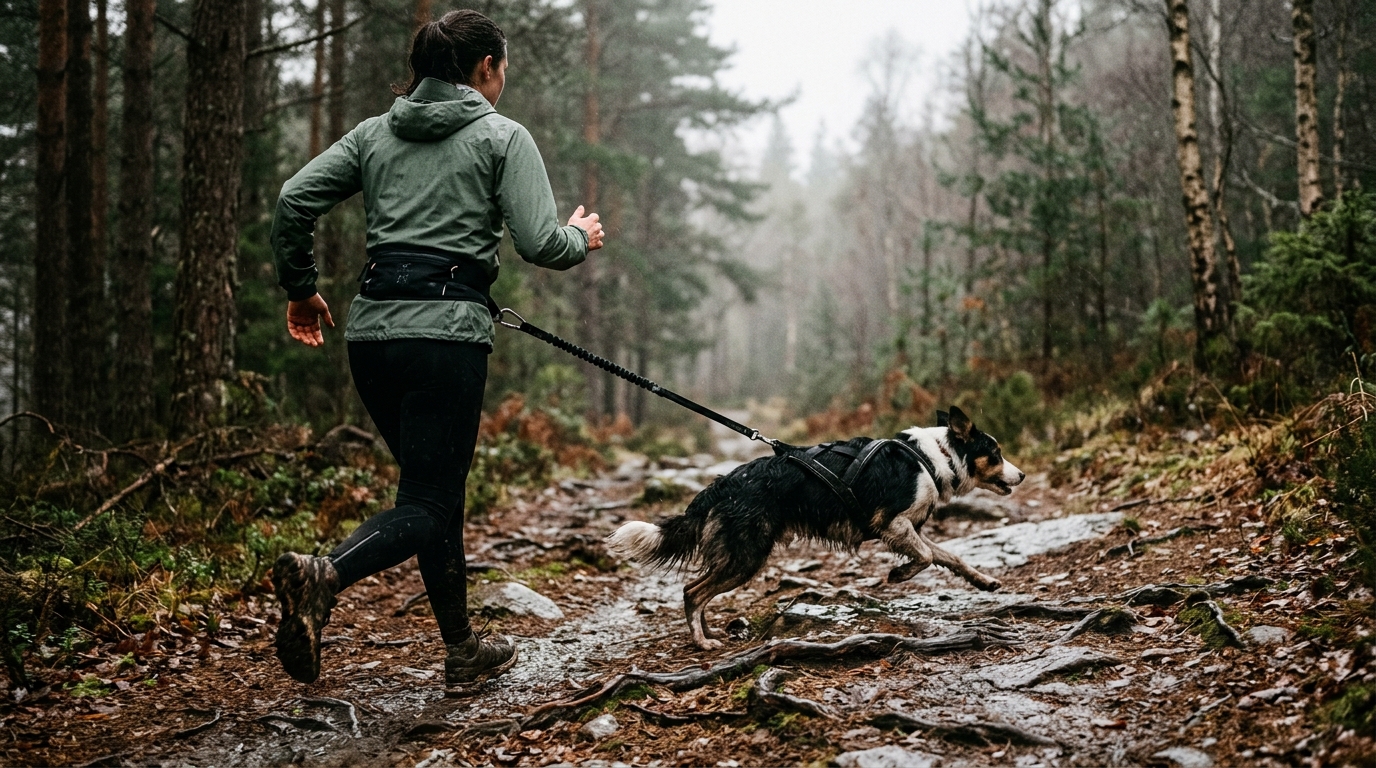
Heading out for canicross in the UK means preparing for sideways rain, deep mud, and unpredictable terrain. Getting your gear right isn’t about looking the part—it’s about preventing chafing for your dog and keeping yourself upright on a slick chalk path. Here is exactly what owners and seasoned runners recommend for British trails, from pulling-specific harnesses to footwear that actually grips.
What Harness and Belt Do You Need for Canicross?
You need a pulling-specific harness with a low chest pull-point for your dog, paired with a dedicated waist belt for yourself. A standard walking harness will chafe your dog’s armpits over long distances, while a proper canicross setup distributes the pulling force safely across your hips and keeps your hands free.
A pulling-specific harness isn’t a nice-to-have; it’s a non-negotiable safety piece. The key difference is where the pull point sits. A canicross harness sits low on the chest and includes reinforced stitching to survive the British mud. You are looking at roughly £40–£80 for a reliable pulling harness, and it is worth spending the money here rather than replacing a cheaper, poorly fitted alternative a month later.
What to look for
- Ergonomic pull point low on the chest, not high on the neck.
- Strong, double-stitched seams – a specialist harness such as the Non-stop Dogwear Freemotion is built for constant pulling.
- High-visibility accents – UK trails often get foggy at dawn; a bright stripe can be a lifesaver.
Belt basics
The belt distributes the dog’s pull across your hips, keeping your posture upright. A sturdy waist-belt with a solid attachment ring is essential. The Neewa Canicross Belt (paid link) has leg loops and a ring at the front for the line, and is a solid budget pick at around £40.
Check Neewa Canicross Belt price → (paid link)
Buy the Neewa Canicross Belt on Amazon (paid link)Trying to make a regular walking belt work for pulling is a common mistake. The grip point is too high, leading to shoulder strain and a jerky pull that can injure both runner and dog.
On misty coastal paths where traffic is light but visibility is low, a high-vis belt is vital.
Read more about canicross basics
The Runner’s Gear: Clothing & Footwear
Running shoes are the first thing most beginners think about, but the wrong pair will send you sliding on a rain-slick heath. Community feedback is unanimous – road shoes lose grip on wet UK trails, leading to ankle twists that could have been avoided with proper trail footwear.
Footwear checklist
- Aggressive tread – a lug pattern that bites into mud.
- Water-resistant uppers – keeps feet dry on soggy ground.
- Breathable midsole – prevents overheating on a sunny summer run.
If you buy boots, look for a rubber sole that grips on wet grass; that’s what most UK trails need. If you are looking for route inspiration to test out a new pair of shoes, check our blog for trail ideas.
Layering for British weather
- Base layer: moisture-wicking merino or synthetic to keep sweat off the skin.
- Mid-layer: lightweight fleece for chilly mornings.
- Outer shell: breathable waterproof jacket; it’s more useful than a heavy winter coat for the typical UK canicross season.
Add high-vis sleeves or a reflective vest. you’ll thank yourself when a car appears on a dimly lit forest track. The Royal Kennel Club’s winter weather advice strongly advocates for reflective gear for both dog and owner during the darker British months.
Over-dressing with a thick winter coat is a frequent error. It traps sweat, leading to a nasty chill once you stop running.
Best running shoes for UK trails
Boots & Protection
Boots aren’t a year-round requirement, but they become vital when you hit sharp rocks, icy pavements or winter grit. A well-fitted boot is the one that doesn’t fall off in thick mud.
When to use boots
- Winter runs on frosty fields or icy footpaths where grit salt is present.
- Rocky coastal routes where a stray stone can puncture a pad.
Fit tips
- Boots should be snug enough to stay on, yet allow toe wiggle.
- Look for a water-proof membrane – many UK trails stay soggy for days after rain.
Budget note: There are few cheap alternatives that combine waterproofing and aggressive tread without sacrificing durability. If you can’t justify a dedicated pair, a sturdy trail shoe with a gaiter is the next best thing.
Dog boots for running
The Leash & Connection
A bungee leash is the only sensible way to protect both you and your dog from sudden stops. Fixed leashes cause “whiplash” in dogs, and are strongly advised against in active dog care guidelines by animal welfare charities like the RSPCA.
Why bungee?
- Shock absorption – smooths out the pull when the dog accelerates or brakes.
- Quick-dry material – UK mud can soak a standard leash, making it heavy and smelly; bungee lines from Non-stop Dogwear stay lighter after a rain.
Comparison snapshot
| Feature | Bungee Leash (Non-stop) | Fixed Leash |
|---|---|---|
| Shock absorption | ✔︎ | ✘ |
| Quick-dry | ✔︎ | ✘ |
| Weight when wet | Light | Heavy |
Using a bike antenna on a canicross run is a mistake. It’s designed for bikejoring, not for the tighter turns on foot trails, and can become a dangerous snag point.
Best leashes for UK canicross
How to Fit Your Canicross Gear
Getting the gear is only half the battle; fitting it correctly is what actually prevents injury.
1. Check the neck clearance The harness neck opening should sit snugly at the base of the dog’s neck, not high up on the throat. You should be able to slide two fingers comfortably underneath.
2. Position the pull point When the bungee line is attached and under tension, the attachment point should sit near the base of the dog’s tail. If it rides up the middle of the back, the harness is too short.
3. Inspect the armpits Run your hand behind the dog’s front legs while they are in the harness. There must be enough clearance that the straps do not rub the delicate skin in the armpits when the front legs extend fully.
Maintenance & Care
Your gear will face more mud than a farmer’s tractor, so regular cleaning isn’t optional. Grit left in a bungee line wears the elastic, so rinse it after muddy runs.
Quick care tips
- Rinse harnesses and belts with a hose after each run, then hang to dry. This prevents mould in humid UK summers.
- Machine-wash trail shoes on a gentle cycle; let them air-dry, never tumble-dry.
- Inspect stitching and buckles after the rainy season; replace any frayed parts before winter.
A simple 30-minute wash routine after a muddy outing helps a harness last, because dried mud grinds at the webbing and stitching.
Frequently Asked Questions
Do I need a special harness for canicross?
Yes. A standard walking harness lacks the low-centered pull point and reinforced stitching required for pulling sports, which leads to chafing, discomfort, and potential injury on a run.
What shoes should I wear for canicross in the UK?
Trail running shoes with an aggressive tread and water-resistant uppers are the only safe bet. Standard road shoes slip instantly on wet British mud and are a common cause of twisted ankles.
Is high-vis gear mandatory?
Highly recommended, especially for early-morning or dusk runs. UK daylight fades quickly in winter, and morning mist can completely obscure visibility on rural roads and forest tracks.
Can I use a regular walking belt?
No. A dedicated canicross belt distributes the dog’s pull across your hips and provides a secure attachment point for the leash. A standard walking belt simply isn’t built to handle that kind of load and will strain your lower back.
Canicross Gear Comparison
| Gear Item | Key Feature | UK Terrain Suitability |
|---|---|---|
| Pulling Harness | Low chest pull point | Essential for mud and hills |
| Canicross Belt | Hip distribution | Prevents lower back strain |
| Trail Shoes | Aggressive tread | Grip on wet grass and chalk |
| Bungee Leash | Shock absorption | Protects dog from sudden stops |
| Waterproof Jacket | Breathable shell | Essential for misty mornings |
| Dog Boots | Waterproof membrane | Required for rocky coastal paths |
What to Do Next
The Mud and Paws Team knows that getting your setup right makes all the difference. You now have a clear picture of the gear that actually matters for UK canicross: a pulling-specific harness and belt, trail-ready shoes, weather-proof layers, boots when the terrain demands, a bungee leash, and a simple care routine to keep everything performing.
If you’re ready to nail down the specifics and avoid costly mistakes, Get the Free Canicross Starter Checklist – it’ll walk you through the final steps of preparing for a safe, comfortable run, from gear fit to post-run recovery. Still have questions about your setup? Feel free to get in touch.
Happy trails, and may your runs be mud-free and your dog’s tail stay wag-on-track!
Related Guides
For a complete overview, see our Canicross Belt Guide: Waist vs Hip and Back Support.
References
As an Amazon Associate we earn from qualifying purchases.
Note: General guidance only, verify details with a qualified professional or official source.