How to Start Canicross: A UK Couch-to-Trail Roadmap
As an Amazon Associate we earn from qualifying purchases. This page contains affiliate links — if you buy through them, we earn a small commission at no extra cost to you.
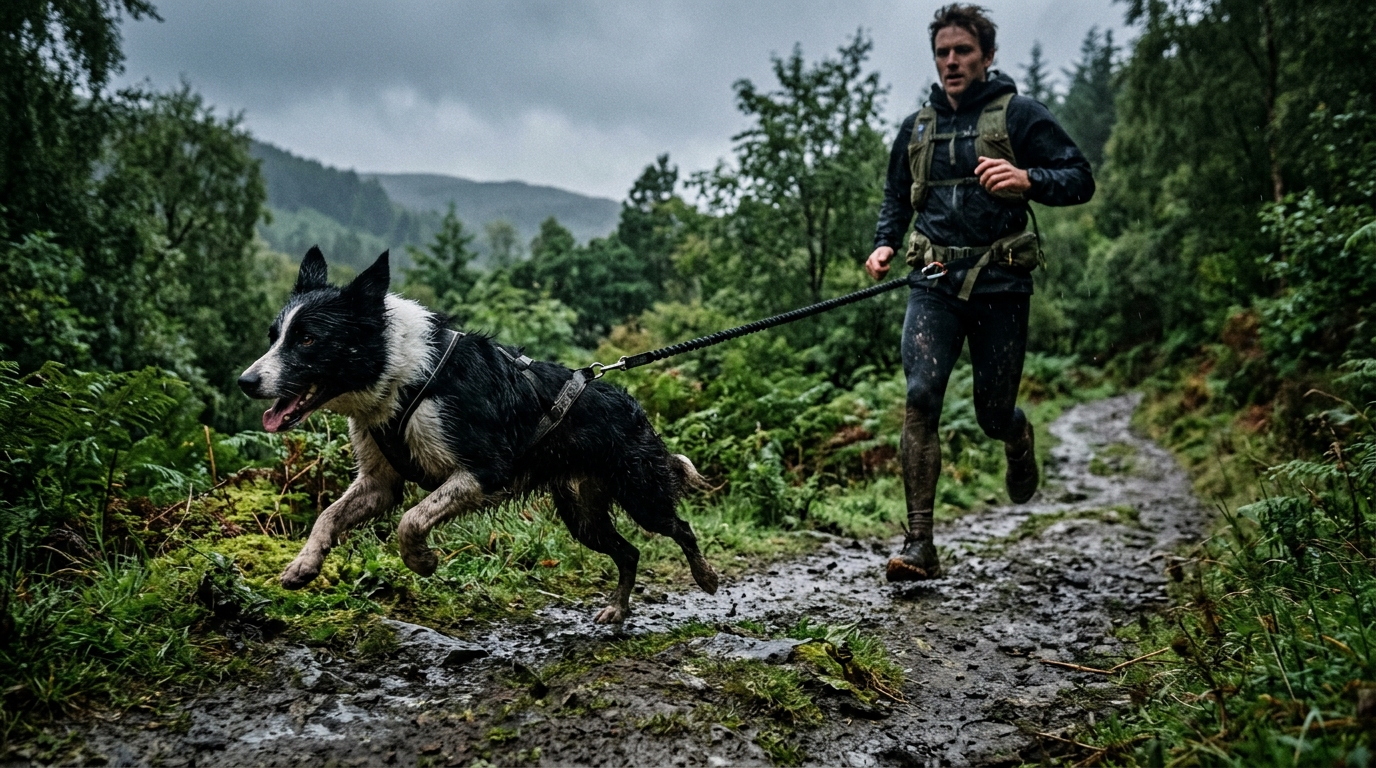
Canicross is cross-country running with your dog attached to you: the dog wears a pulling harness, you wear a padded belt on your hips, and a shock-absorbing bungee line joins the two. The dog runs slightly ahead and pulls; you run, steer with your voice and try not to go over on the downhills.
Most people start in the wrong order. They buy a kit online, clip it on and go for a run, then discover the harness rubs, the belt rides up and the dog would rather sniff a gatepost than pull. The order below is the one we’d follow: check the dog, try the kit before you buy it, build up slowly, know where you’re allowed to run, then find other people to run with. Each step links to a guide that goes into the detail.
Want it on one page? Get the Free Canicross Starter Checklist and tick it off as you go.
Step 1: Is your dog ready to pull?
Pulling a person uphill on wet ground is hard, repetitive work for a dog’s shoulders, hips and spine, so this step comes before any shopping.
- Fully grown first. The usual rule in UK canicross is no pulling before 12 months, and races generally won’t accept younger dogs. Large and giant breeds often keep growing well beyond that, so ask your vet when your dog’s growth plates are likely to have closed. Our puppy running guide explains what you can usefully do in the meantime.
- Built for running. Flat-faced breeds such as pugs and French bulldogs struggle to cool themselves and shouldn’t pull. Very small dogs can join in, but they set the pace rather than add power.
- A vet check if there’s any doubt. Any history of lameness, hip or elbow problems, or a dog that’s carrying weight, is worth a conversation before you start.
- The right head. A dog that’s keen to go forward is easier to start with than one that wants to stay at your side, but neither is a dealbreaker. Our suitability check walks through age, fitness and temperament, including rescue dogs.
An older dog doesn’t automatically rule you out. Plenty of seven- and eight-year-olds do gentle canicross, or “cani-walking” on a loose line, once a vet is happy with their joints.
Step 2: Get three pieces of kit, and try before you buy
You need three things, and fit matters far more than the brand.
- A pulling harness for the dog. Not a walking harness or a collar. A proper canicross harness spreads the load across the chest and back so the dog can pull without pressure on the throat. Dogs’ shapes vary far more than their weights, so choose the harness by the shape of your dog, not just the size chart.
- A belt for you. It should sit low on your hips, not round your waist. Leg loops stop it creeping up. Our belt guide covers fitting it so your lower back doesn’t take the strain.
- A bungee line. Typically around two metres stretched, with an elastic section that softens the jolt when the dog sets off or spots a squirrel. Our bungee line guide explains length and stretch.
Here’s the step most beginners skip: try the kit before you buy it. Many clubs and canicross coaches run taster sessions with loan harnesses in different styles. Twenty minutes trying three harnesses on your own dog tells you more than any review. Once you know what fits, you can decide whether a matched starter set or separate pieces makes more sense. Our beginner kit list shows what’s worth buying first and what can wait.
If you’d rather buy a complete belt-and-line system, the Ruffwear Omnijore joring system (paid link) is one widely available option. You’ll still need a harness that suits your dog.
For your own clothes, trail shoes with real grip matter more than anything else on UK mud. Our what to wear guide covers the rest.
Step 3: Build up over about eight weeks
Your dog is probably fitter than you, but they aren’t used to pulling, and you aren’t used to running behind a dog. Keep it short and frequent at first, on soft, flat ground, two or three times a week with rest days in between.
| Weeks | What you do | What you’re teaching |
|---|---|---|
| 1–2 | Walks in the new harness and belt; a “let’s go” cue as the dog moves ahead | The harness means work and going forward is good |
| 3–4 | Short running bursts of one to two minutes, walking in between | Pulling ahead while you jog; stopping on cue |
| 5–6 | Longer bursts and a few gentle hills; start “left” and “right” at junctions | Steering, and keeping the line tight but not frantic |
| 7–8 | Continuous running for 2–3 km if both of you are comfortable | Holding a steady pace past distractions |
If your dog seems sore, flat or reluctant the next day, drop back a week. Three things will probably go wrong on the way, and each has its own guide:
- The dog won’t pull, or keeps stopping. Usually the harness fit, the motivation or the terrain. See my dog won’t pull.
- The dog pulls far too hard. It feels like progress, but you’ll end up on your face on a downhill. See running with a dog that pulls.
- The dog ignores you at speed. Commands learned at walking pace often fall apart when you’re running. See teaching canicross commands.
Watch the weather as well. Dogs overheat far faster than people when they’re working hard. On warm days, run early or not at all. Our hot weather guide covers the warning signs.
Step 4: Know where you’re allowed to run
You can run with your dog on public footpaths and bridleways in England and Wales, as long as the dog is under close control. Open access land, such as moorland, heath and downland, has an extra rule many runners don’t know: between 1 March and 31 July, dogs must be on a lead of no more than two metres, and at any time of year near livestock. Some grouse moors ban dogs altogether, so check local signs.
Livestock is the one to take seriously. Since the Dogs (Protection of Livestock) (Amendment) Act came into force in March 2026, the fine for livestock worrying is unlimited, and the offence now covers roads and paths as well as fields. In practice: shorten up, slow down and walk past sheep and cattle.
Scotland’s access rights work differently, and some National Parks and forests have their own rules. Our guide to where you can legally run with your dog covers it country by country, along with passing walkers, horses and cyclists.
Step 5: Find your people, then a first event
Running with others is the fastest way to learn. Dogs pick up pace and confidence from other dogs, and experienced runners will spot a badly fitted harness from fifty metres.
- Find a group. Canicross Trailrunners keeps a map of UK groups and clubs, and many local groups organise through social media. Searching “canicross” with your county or nearest town usually turns something up.
- Try a taster or social run before you enter anything competitive.
- Then pick a first event. UK canicross races are typically 3–7 km on forest trails, with a staggered start so dogs aren’t bunched up. Most organisers require dogs to be at least a year old, and many run a separate short course for beginners. Our events guide explains how to find races and what entering one involves.
Quick Answers
Is my dog too old to start canicross?
Usually not, if they’re fit and pain-free. Age matters less than joint health. Get a vet check for dogs over about seven, stick to soft ground, keep the pace gentle, and stop if they’re stiff the next day.
Do I need expensive gear?
No. You need a harness that fits your dog’s shape, a belt that stays on your hips and a bungee line. Fit matters more than price. A well-fitted mid-range harness beats a premium one in the wrong shape.
What if my dog pulls too hard?
Make sure the bungee line is doing its job, stay on flat ground until your “steady” command works, and keep downhills slow. Our guide to running with a dog that pulls covers the setup and training.
Is canicross the right sport, or would bikejoring suit us better?
Canicross is the place to start for almost everyone. It’s cheaper and slower, and it builds the commands you need for faster sports. If you’re curious, compare canicross, bikejoring and scootering.
Your canicross reading list
In roughly the order you’ll need them:
- Is my dog suited to canicross?
- Canicross kit for beginners: what you actually need
- Choosing a harness by your dog’s shape
- How to wear a canicross belt
- Teaching canicross commands
- Where you can legally run with your dog
- Finding canicross races and runs
Further Reading
- GOV.UK: The Countryside Code
- Canicross Trailrunners: find a group
- Defra: law changes strengthen protection for livestock
- Peak District National Park: dogs and access land
As an Amazon Associate we earn from qualifying purchases.
Note: General guidance only, verify details with a qualified professional or official source.