Canicross Belt Guide: Questions Answered
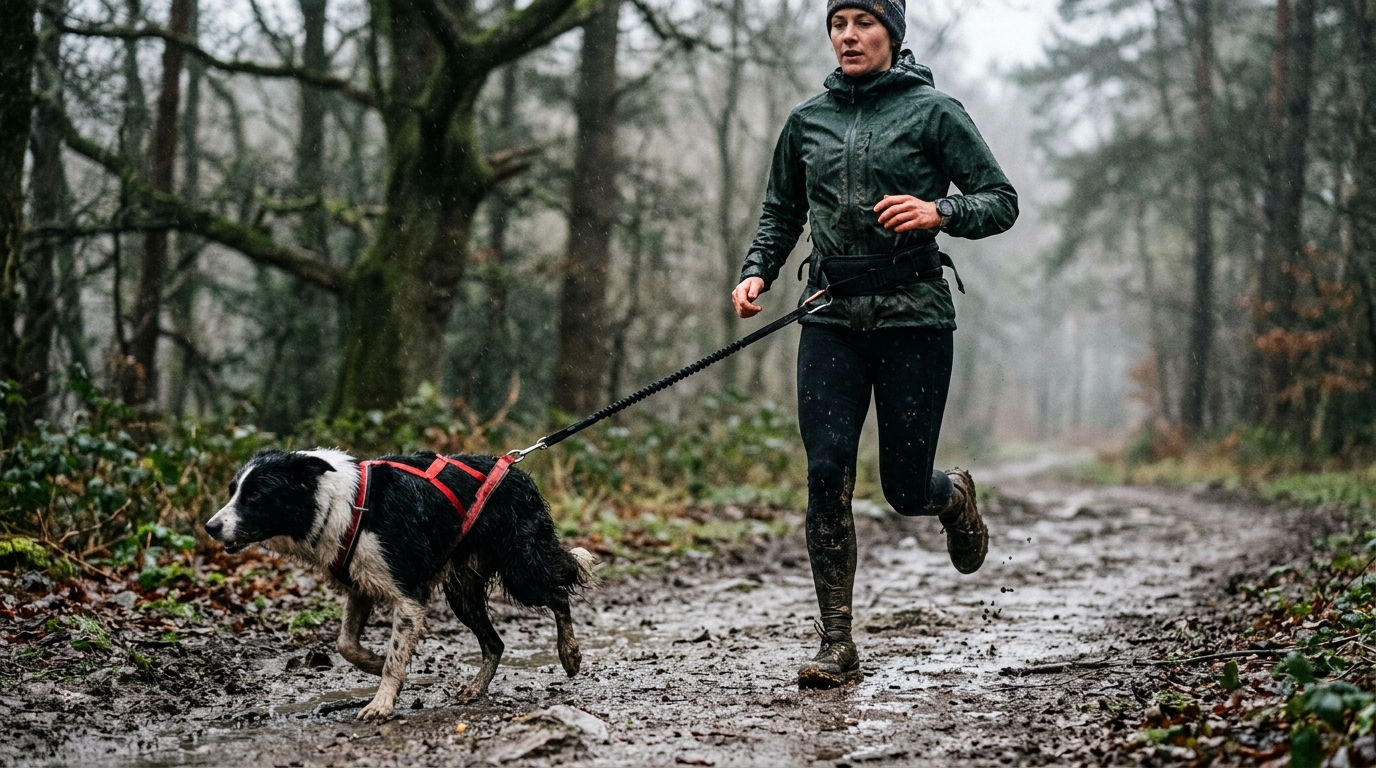
Skip the long read: here are quick, straight answers to the questions UK beginners most often ask about canicross belt guide, with links through to the full guides.
Why does my canicross belt keep riding up my ribs?
A belt rides up because forward-leaning running mechanics combine with a loose waist strap to create an upward pivot. If the belt sits at waist level rather than low on the hips, the pulling force of the dog acts as a lever, lifting the belt towards your sternum with every stride. Gravity pulls the belt’s centre of mass upward along your torso when you lean forward, and loose webbing on sweaty skin allows it to inch higher with every step. Full details in our guide to Canicross Belt Riding Up? Fit and Setup Fixes.
Should I buy a canicross starter set or piece it together?
Buying a purpose-built starter set guarantees the components actually work together, whereas matching a separate belt, harness, and line often leads to slipping belts and chafing harnesses. A complete kit saves you from costly fit-fails and packs safety-critical features that piecemeal gear simply cannot match. Full details in our guide to Are Canicross Starter Sets Worth Buying?.
Where exactly should the canicross belt sit on my body?
The belt should sit directly on the pelvic bone, completely avoiding the soft waist area to prevent bruised ribs and a sharp ache in your lower back. A high-waisted fit turns your torso into a lever, compressing your lower spine every time your dog pulls, whereas a low-hip fit absorbs that force safely through your centre of gravity. Placing the belt on the bony ridge of the hip transforms it into a stabiliser, keeping your spine neutral and preventing lower-back strain. Full details in our guide to Canicross Belt Guide: Waist vs Hip and Back Support.
Is a static lead better than a bungee line for canicross?
A static lead is essentially a dead-weight rope with zero shock absorption, meaning every time your dog lunges the force travels straight into your hips and risks straining your back. A bungee line absorbs the shock, preventing the jarring run and the sudden sideways jerk that can throw you off balance on uneven UK trails. The physics of the run rely on that stretch to keep you safe and stable while your dog pulls forward. Full details in our guide to Choosing a Canicross Bungee Line: Stretch and Length Explained.
How do I know if the bungee line length is right for me?
Most manufacturers list the fully stretched length, not the resting length you see out of the box, which can be confusing for new runners. If you buy a line assuming it will give you two metres of slack from hip to harness, you’ll be caught out as soon as your dog pulls and the line stretches. That sudden reduction can pull a runner off balance, especially on uneven UK trails where a stray tree root can send the line jerking sideways. Full details in our guide to Choosing a Canicross Bungee Line: Stretch and Length Explained.
Can I use a standard walking harness for canicross?
A standard walking harness will chafe your dog’s armpits over long distances, while a proper canicross setup distributes the pulling force safely across your hips and keeps your hands free. You need a pulling-specific harness with a low chest pull-point, as a high neck pull-point puts unnecessary strain on your dog’s neck. The key difference is the placement of the pull point and the reinforced stitching required to survive the British mud. Full details in our guide to What to Wear for Canicross in the UK.
What should I wear on my feet for canicross in the UK?
You need footwear that actually grips on a slick chalk path and prepares you for sideways rain and deep mud. Owners and seasoned runners recommend shoes with aggressive tread to keep you upright on unpredictable terrain, rather than standard trainers that might slip. Getting your gear right isn’t about looking the part—it’s about preventing chafing for your dog and keeping yourself upright on the trails. Full details in our guide to What to Wear for Canicross in the UK.
Why does my dog pull so hard on the leash?
A high-waisted belt turns your torso into a lever, compressing your lower spine every time your dog pulls, which can encourage them to pull harder to get past the resistance. When the leash attaches high up, the dog’s forward momentum physically lifts your torso, creating a sensation of being yanked and increasing the risk of lumbar pain. That setup raises the risk of lower-back strain. Full details in our guide to Canicross Belt Guide: Waist vs Hip and Back Support.
How do I stop my belt from slipping while running?
A belt that rides up to your ribs mid-run is usually due to a biomechanical mismatch and a few simple setup errors you can sort out in under ten minutes. The fix starts by loosening everything to remove pre-existing tension and placing the belt on the hips rather than the waist. A hip-level belt positions the pull lower, using your pelvis as a natural anchor, which prevents the upward pivot caused by forward-leaning running mechanics. Full details in our guide to Canicross Belt Riding Up? Fit and Setup Fixes.
What is the difference between a waist belt and a hip belt?
A waist belt sits on soft tissue and turns your torso into a lever, compressing your lower spine every time your dog pulls, whereas a hip belt sits directly on the pelvic bone. A low-hip fit absorbs that force safely through your centre of gravity, keeping your spine neutral and preventing lower-back strain. It’s the difference between standing on tip-toes and standing flat-footed, allowing you to stay balanced on muddy, uneven trails where sudden direction changes are common. Full details in our guide to Canicross Belt Guide: Waist vs Hip and Back Support.
Do I need special equipment for muddy UK trails?
You need a pulling-specific harness with a low chest pull-point and a dedicated waist belt for yourself to handle the specific demands of British trails. A proper canicross setup distributes the pulling force safely across your hips and keeps your hands free, which is essential when navigating sideways rain and deep mud. The key difference is the placement of the pull point and the strong, double-stitched seams required to survive the conditions. Full details in our guide to What to Wear for Canicross in the UK.
Why is my bungee line shorter than the label says?
The tag says 2 metres, but the line that arrives barely reaches your waist because manufacturers almost always list the fully stretched length, not the resting length you see out of the box. The actual unstretched length is typically around 1.4m — roughly 60–75% of the fully stretched length. If you buy a line assuming it will give you two metres of slack from hip to harness, you’ll be caught out as soon as your dog pulls. Full details in our guide to Choosing a Canicross Bungee Line: Stretch and Length Explained. For the full picture, start with our Canicross Belt Guide: Waist vs Hip and Back Support.