My Dog Won't Pull on Runs: Troubleshooting Canicross
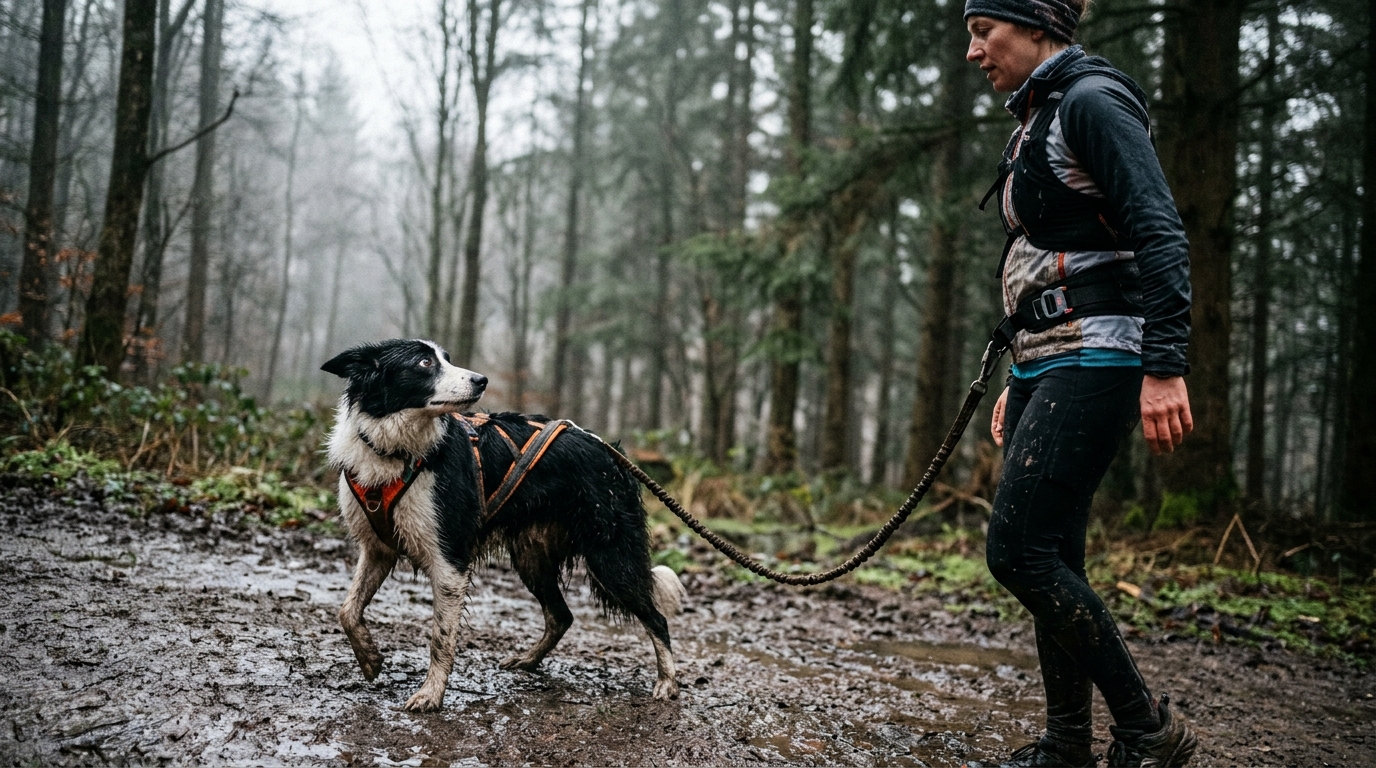
You’ve spent decent money on a Canicross setup, hit the trail, and your dog is just trotting next to you. The whole point of the sport feels lost. A “dead-dog” run usually comes down to three specific issues: the harness setup, the dog’s natural drive, or the terrain you’re running on. Fix these, and the pull will follow.
Is Your Gear Stopping Your Dog From Pulling?
If your dog refuses to pull, the harness attachment point is usually the culprit. For canicross, the bungee line must attach to the BACK D-ring of a dedicated pulling harness — the attachment point between the shoulder blades, not the chest. This is the single most common setup error: a front-clip walking harness physically redirects a dog sideways when it pulls, which is why they stop or drift rather than run forward. A purpose-built canicross harness (such as the Non-stop Dogwear Freemotion or Zero DC Short) with the line clipped to the high-back D-ring allows the dog’s full body weight to go into a forward pull. Beyond gear, a lack of pulling often comes down to a scent-driven dog getting distracted, or wet, muddy UK terrain making them lose traction.
A common mistake is using a standard walking harness or a no-pull front-clip harness for canicross. These redirect dogs sideways — the opposite of what you need. A purpose-built canicross Y-front harness with a back attachment point is essential.
Harness Fit Matters
- Two-finger rule: You should be able to slip two fingers between the harness and the dog’s ribcage. Tight straps can rub under the armpit, especially on longer runs. Even a good pulling harness can chafe under the arm on longer runs. If yours rubs, try a slightly looser fit or a different model.
- Back clip only: Always clip the bungee to the BACK D-ring of the pulling harness. Using the front chest clip — designed for no-pull walking — redirects the dog sideways and prevents forward pulling entirely.
Muddy UK Factor
Mud and rain add weight to the harness and can make the fabric feel heavy, causing the dog to lose traction. The Freemotion’s slick nylon under wet conditions can become a slippery “vest” that the dog shies away from. If your dog walks calmly on the leash, the attachment point is likely in the wrong place – a quick visual check will confirm it.
Quick equipment checklist
- Verify the bungee attaches to the BACK D-ring (between the shoulders) — not the chest clip.
- Check strap tightness – two-finger clearance all around.
- Inspect for mud buildup; rinse and dry before the next run.
For a deeper look at gear basics, browse our blog.
The Motivation Check – Is the Drive Missing?
Not every dog is born with a high-octane prey drive. The RSPCA notes that exercise needs vary wildly by breed, meaning some dogs, especially scent hounds, will naturally want to sniff a trail and lose any urge to sprint ahead. This distinction between “lazy” and “fearful” often trips new runners.
Prey Drive vs. Scent Drive
A Border Collie will chase a thrown toy with gusto, while a Labrador may prefer to investigate every scent along the path. If the dog is constantly stopping to sniff, you’re looking at a scent-driven dog rather than a speed-driven one.
Stimulating the Pull
- Tug test: Before you head out, grab a sturdy tug toy and give a short, sharp pull. If the dog lunges forward, the pull instinct is intact. The same test on a dog that merely tugs at the line indicates a lack of motivation rather than a gear issue.
- Short line trick: Using a 2-3 m line forces the dog to stay close and maintain forward momentum. Many UK runners swear by this when the dog keeps drifting to the side on flat, paved routes.
- Play-before-run routine: A quick game of fetch or a brief sprint with the tug toy can crank up adrenaline. A five-minute warm-up game often switches a reluctant dog on for the rest of the session.
When Motivation Fails
If the dog still refuses to pull after a tug test, consider a scent-focused workout first. Short, high-energy scent games can build confidence, after which the pull cue becomes more natural.
The Environment Check – Is the Terrain the Enemy?
British weather isn’t exactly a Canicross playground. Mud, gravel, and sudden rain showers can turn a promising trail into a slippery obstacle course.
Mud and Traction
When paws lose grip, the dog instinctively slows to avoid a tumble. On steep, muddy trails, a harness with a broader chest strap spreads the pressure more evenly and can get a reluctant dog moving again. Mud and slippery surfaces are a common cause of dogs refusing to engage in the UK.
Rain, Cold, and Paw Care
Cold, wet paws can become stiff, making the dog reluctant to lift its legs quickly. The Royal Kennel Club advises wiping down paws after winter walks to remove grit and prevent stiffness. A simple tip from seasoned runners: carry a lightweight towel and dry the paws off-run to prevent chilling. If the temperature drops below 5 °C, a quick wipe-down and a brief warm-up jog can make a huge difference.
Flat, Boring Routes
Even a well-fitted harness won’t help if the route is a featureless, paved path. Dogs with high drive need variety – a short hill or a winding forest track adds the challenge they crave. If the run feels like a stroll, swap the route for something with a gentle incline.
Safety warning: If the dog is limping, yelping, or refusing to move on any surface, stop immediately. A hidden injury could be the real culprit.
Worth knowing: Mud and slippery surfaces are a common cause of dogs refusing to engage in the UK.
A Step-by-Step Fix for Reluctant Pullers
Now that you’ve ruled out gear, motivation, and terrain, it’s time to put a plan into action. This five-step routine has been field-tested by a range of UK runners, from beginners in suburban parks to seasoned athletes in the Scottish Highlands.
Step 1 – Check the harness attachment point
Attach the bungee to the BACK D-ring. This is the attachment point between the shoulder blades on a purpose-built canicross harness. A back attachment harnesses the dog’s full body weight into a forward pull. Using the front chest clip — found on no-pull walking harnesses — redirects the dog sideways and will prevent pulling entirely. If you are not using a dedicated canicross harness (such as the Non-stop Freemotion, Zero DC Short, or similar Y-front pulling harness), this is the first thing to fix.
Step 2 – Play the tug game
Play the tug game. Grab a sturdy tug toy, give a short, enthusiastic pull, and reward the dog with a treat or a quick chase. This spikes adrenaline and reinforces the pulling instinct before you even start running. It sets the tone that this is a working session, not a stroll.
Step 3 – Use a short line
Use a short line. Start with a 2–3 metre line. A short line forces the dog to stay close, making it easier to correct any drift. It keeps the pull consistent and stops them wandering off into the undergrowth to chase a scent.
Step 4 – Reward the pull
Reward the pull. Every few metres of solid pulling, shout a cue like “good pull” and offer a treat or a quick tug-toy flash. Intermittent rewards keep the dog’s focus even on longer, tiring runs. Positive reinforcement builds the habit faster than simply expecting them to know what to do.
Step 5 – Teach a release cue
Teach a release cue. Teach a clear “stop” or “slow” command. When you need to pause, a sharp “stop” followed by a gentle tug on the line signals the dog to ease off. Consistency here prevents confusion and keeps you from being dragged into a hedge when you need to catch your breath.
Putting it together: Warm-up with a 5-minute tug session, clip the bungee to the BACK D-ring of the canicross harness, set the short line, and begin the run. If the dog hesitates, repeat the tug cue and give a small treat. Within a few minutes most dogs settle into a steady pull.
When to Stop – Red Flags to Watch For
Even the best-crafted plan can’t mask a genuine problem. Keep an eye out for these warning signs and don’t push through them.
- Pain or injury: Limping, yelping, or refusing to move any distance. Stop immediately and check paws and joints.
- Fear or anxiety: Cowering, excessive panting, or a tail tucked tightly. The dog may be stressed by the harness, the line, or the environment.
- Age or health concerns: Older dogs or breeds with known joint issues (e.g., bulldogs) may need a vet check before regular runs.
- Persistent refusal: If after multiple attempts the dog still won’t pull, consider a professional Canicross coach. A trained eye can spot subtle cue mismatches you might miss.
If you’re unsure about your dog’s fitness for the sport, reach out to a local vet or drop us a line via our contact page.
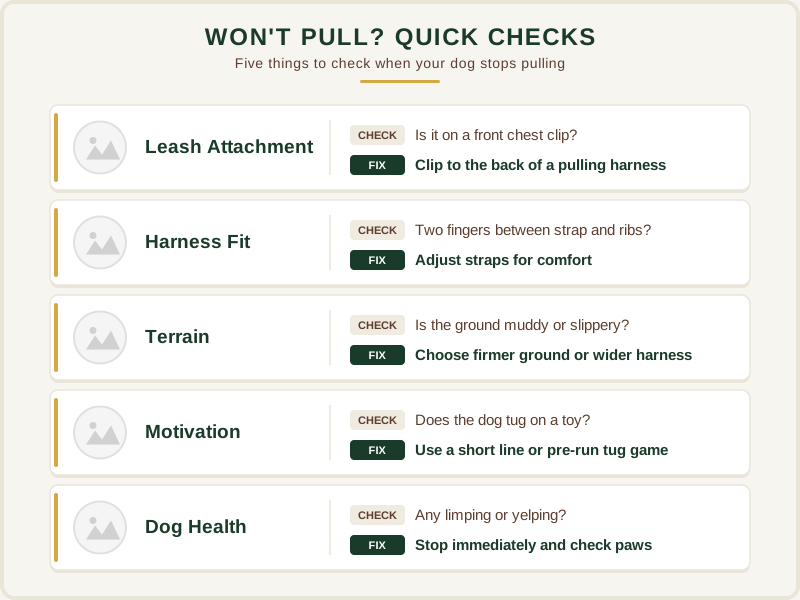
Canicross Troubleshooting Checklist
| Issue | Check | Fix |
|---|---|---|
| Leash Attachment | Is it on the BACK D-ring? | Use a purpose-built canicross harness; attach bungee to the back |
| Harness Fit | Two fingers between strap and ribs? | Adjust straps for comfort |
| Terrain | Is the ground muddy or slippery? | Choose firmer ground or wider harness |
| Motivation | Does the dog tug on a toy? | Use a short line or pre-run tug game |
| Dog Health | Any limping or yelping? | Stop immediately and check paws |
Keep Learning
You now have a clear diagnostic path: check the gear, spark the drive, and respect the terrain. With the right harness set up, a short line, and a quick tug warm-up, most “dead-dog” runs transform into smooth, confident pulls. Remember the red flags – pain, fear, or persistent refusal aren’t to be ignored.
If you’re ready to tighten up your whole Canicross routine, Get the Free Canicross Starter Checklist. It walks you through post-run recovery, gear maintenance, and a quick health scan so your next run starts on the right foot – or paw. Keep experimenting, stay safe, and enjoy the burst of energy when your dog finally takes the lead. Happy running!
Related Guides
For a complete overview, see our How to Start Running With Your Dog (The Right Way).
Where I Learned This
Note: General guidance only, verify details with a qualified professional or official source.