Is My Dog Suited to Canicross? Age & Temperament Check
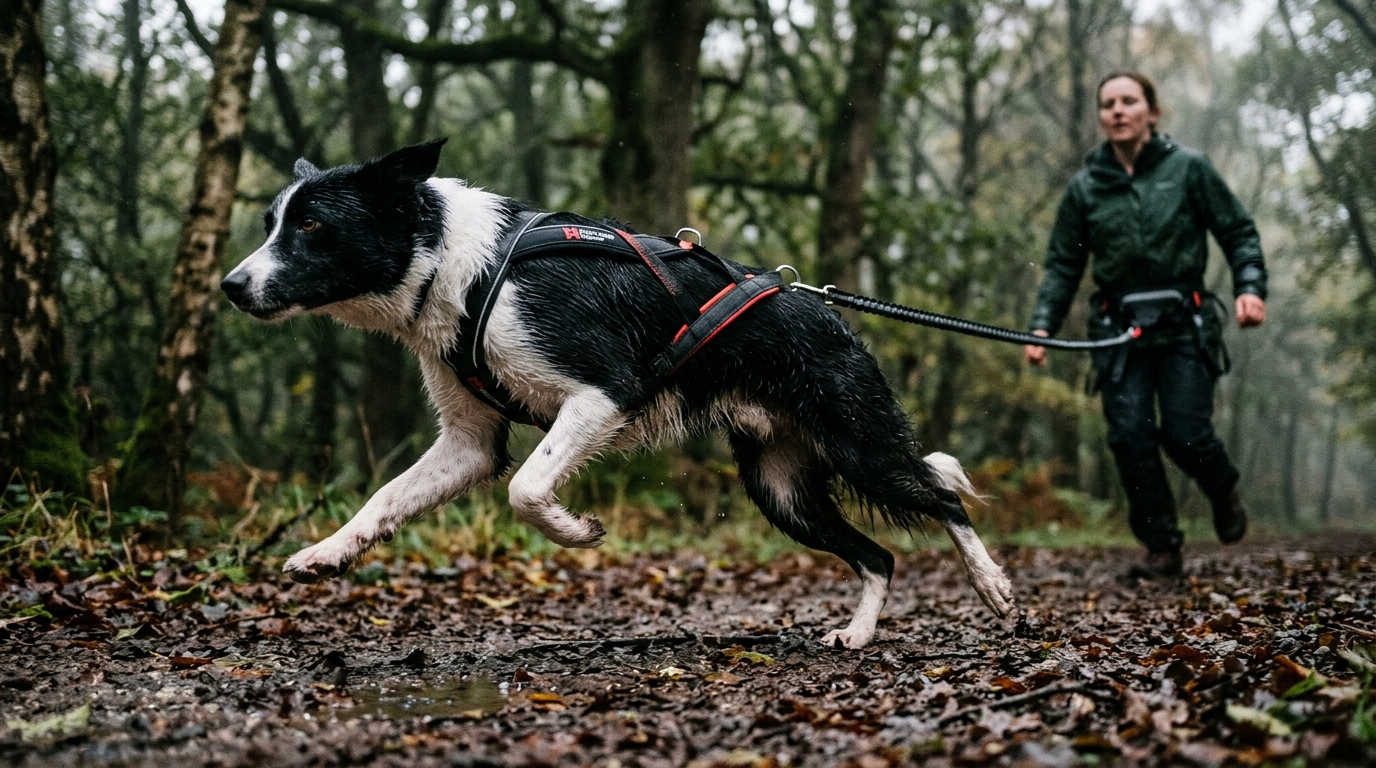
Before you strap a pulling harness to your dog and hit the trails, you need to know if they are actually built for canicross. This isn’t just a muddy jog with your pet; it’s a high-impact pulling sport that places serious, sustained stress on joints, cardiovascular systems, and mental focus. Getting the suitability check wrong can lead to long-term injuries, especially in young or heavy-set dogs. Here’s how to audit your dog’s age, fitness, and temperament so you know exactly where you stand.
What is the Minimum Age for Canicross in the UK?
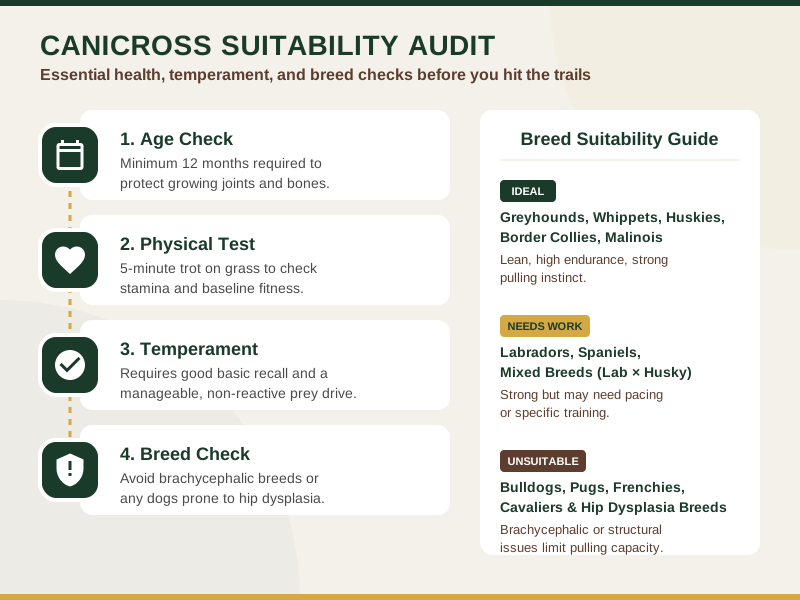
In UK canicross the accepted minimum is 12 months before a dog starts pulling, and race organisers generally won’t accept younger dogs. The reason is the growth plates: pulling puts repeated load through joints that are still developing. Large and giant breeds often keep growing for longer, so ask your vet when your dog is likely to be skeletally mature.
Veterinary consensus warns that premature pulling can lead to long-term joint issues, especially in breeds with a lot of cartilage development still under way. Treat 12 months as the earliest start, not a target. For a big, slow-maturing dog, waiting longer costs you nothing.
Yes/No summary:
- 12 months or older? ✅ Yes – eligible to pull.
- Under 12 months? ❌ No – stick to walking and basic obedience.
Looking big enough isn’t the test, so check with your vet before a young dog starts pulling.
If you’re wondering about gear now, the beginner kit page breaks down what you’ll need once the age check is clear.
The “Pre‑Run Fitness Test”: Can Your Dog Actually Handle It?
a quick trot tells you more than a week of leisurely walks. If you want to know where your dog stands physically, try this 5-Minute Trot on a flat, grass surface:
- Warm up first: Start with a brisk 2-minute walk to get the blood flowing and muscles loose.
- Increase the pace: Move into a gentle jog for 5 minutes, making sure to keep the leash loose so there is no pulling pressure yet.
- Watch the breathing: It should be heavy but rhythmic. Frantic gasping is a sign to stop immediately.
- Check the gait: Look for smooth movement. There should be no limping and no “bunny‑hopping” (where the dog lifts both hind legs together, which often signals hip strain).
- Look for overheating: Watch out for excessive panting, drooling, or a glazed stare.
If the dog struggles to maintain the trot, it isn’t ready for a 5 km canicross run. The test flags cardiovascular fitness, joint stability, and heat tolerance in one go.
Owners often assume a dog that “does fine on a walk” will cope with sustained pulling. The reality is the extra load changes the biomechanics completely.
Now that you’ve got a concrete health check, Get the Free Canicross Starter Checklist – it’s the next logical step to keep both you and your dog well‑rested after training.
Temperament: The “Soft” Suitability Factor
A dog can be physically fit and still be a liability if its mind isn’t up to the task. In canicross, three mental traits matter most:
- Prey Drive: The dog should chase the runner alongside you, not dart off after squirrels or birds. High prey drive can turn a run into a sprint away from you, risking injury to both.
- Recall & Focus: When a sudden distraction appears – a passing cyclist, a barking neighbour’s dog – the dog must reliably return to the runner’s side. Poor recall leads to dangerous “run‑away” incidents on narrow country paths.
- Anxiety Levels: Some dogs become nervous with the pressure of a pulling harness or the noise of a crowded trail. Ironically, anxiety can make them pull harder as a stress response, which can strain joints.
Red flags: lunging at other dogs, refusing to settle after a short break, or shaking when the harness is tightened.
If you spot any of these, consider a gradual desensitisation programme before any pulling attempts. You can check our blog for step-by-step canine recall plans.
Breed Suitability: Who Wins and Who Should Skip
Not every breed’s anatomy or instinct lines up with canicross demands. The Kennel Club notes significant structural differences across breeds, and here is how that translates to the trail:
| Yes – Ideal | Maybe – Needs Work | No – Generally Unsuitable |
|---|---|---|
| Greyhounds, Whippets (lean, natural sprinters) | Labradors (strong but often need pacing) | Bulldogs, French Bulldogs, Pugs (brachycephalic, short‑breathed) |
| Huskies (endurance, love of pulling) | Spaniels (good walkers, but may lack stamina) | Cavalier King Charles (delicate joints) |
| Border Collies, Malinois (high focus, work ethic) | Mixed breeds – judge dominant traits (e.g., Lab×Husky → likely good) | Any breed with known hip dysplasia issues (e.g., heavy‑set bulldog mixes) |
Why the split matters: A Border Collie brings laser focus to the job, while a Bulldog can be panting heavily and struggling after even a short jog.
If you have a mixed breed, look at the dominant physical traits: a Lab×Husky mix usually inherits the Husky’s pulling enthusiasm, making it a solid candidate.
The Rescue Dog Nuance: Is It Possible?
Rescues often bring a surplus of enthusiasm to new activities, but they can also carry hidden trauma. A rescue’s past can show up as heightened anxiety around the harness or an over‑reactive response to crowds.
Key points for rescues:
- Slow desensitisation: Let the dog wear the harness for short, calm periods at home before any trail work.
- Watch for reactivity: If the dog snaps or growls when the harness is tightened, it may need a calmer sport first, such as treibball, which focuses on herding instincts without the pulling load.
- Patience pays off: a nervous rescue dog can need months of gentle harness work before its first proper run.
Reactive rescue warning: If your dog shows persistent fear or aggression during the desensitisation phase, it’s best to postpone canicross. Feel free to contact the team or a qualified behaviourist for specific advice.
Before You Buy
You’ve now run through the three pillars of the Canicross Suitability Audit:
- Age check – 12 months minimum for pulling.
- Physical test – the 5‑minute trot reveals stamina and joint health.
- Temperament scan – prey drive, recall, and anxiety decide safety on the trail.
If your dog ticks all the boxes, you’re good to go. Pair the right harness (the Non-stop Dogwear Freemotion is a strong choice, though it’s a specialist piece that is a bit of a faff for casual walks) with a solid training plan, and you’ll have a sport that strengthens both of you.
If any red flags popped up, take a step back. Adjust training, wait for the dog to mature, or explore a less demanding activity. Either way, you’re making an informed decision rather than throwing money at a hobby that could hurt your companion.
Next move: Grab our free Canicross Starter Checklist – it covers the suitability checks, the kit, and the early sessions so you and your dog get off on the right foot.
Happy trails, and keep those paws happy!
Canicross Breed Suitability Guide
| Suitability | Breeds | Notes |
|---|---|---|
| Ideal | Greyhounds, Whippets, Huskies, Border Collies, Malinois | Lean, high endurance, strong pulling instinct |
| Needs Work | Labradors, Spaniels, Mixed Breeds (Lab×Husky) | Strong but may need pacing or specific training |
| Unsuitable | Bulldogs, French Bulldogs, Pugs, Cavalier King Charles | Brachycephalic or prone to joint issues |
| Unsuitable | Breeds with Hip Dysplasia | Structural issues limit long-term pulling capacity |
Frequently Asked Questions
Do I need a special harness for a beginner?
A basic canicross harness, with the line attaching on the dog’s back, works for most first-timers; a specialist harness such as the Non-stop Dogwear Freemotion is worth it once the dog is comfortable with the sport. Do not use a standard walking collar, as pulling against it will damage the dog’s trachea.
Can a 10‑month-old puppy ever do canicross?
Legally, no. The UK rule is a hard 12‑month minimum for pulling to protect their developing joints. You can stick to walking, basic obedience, and getting them used to the harness without any load until their first birthday.
How often should I run with my dog?
Start with one short session per week, gradually building to two or three runs as long as the 5‑minute trot remains easy for them. Over‑training causes fatigue and joint strain, especially in colder, damp UK weather.
What if my dog hates the harness?
A poorly fitted harness causes rubbing and anxiety, a common reason dogs reject them. Try a gradual desensitisation routine: let the dog wear it for a few minutes at home, rewarding calm behaviour, before you ever attempt a pull.
Are brachycephalic breeds ever safe for canicross?
Generally, no. Bulldogs, Pugs, and French Bulldogs struggle with breathing under exertion, and owners frequently report early exhaustion and dangerous overheating. Stick to breeds with longer snouts for any pulling activities.
Related Guides
For a complete overview, see our How to Start Canicross: A UK Beginner’s Guide.
Further Reading
Note: General guidance only, verify details with a qualified professional or official source.