Is My Dog Built for Bikejoring? Size and Drive Requirements
As an Amazon Associate we earn from qualifying purchases. This page contains affiliate links — if you buy through them, we earn a small commission at no extra cost to you.
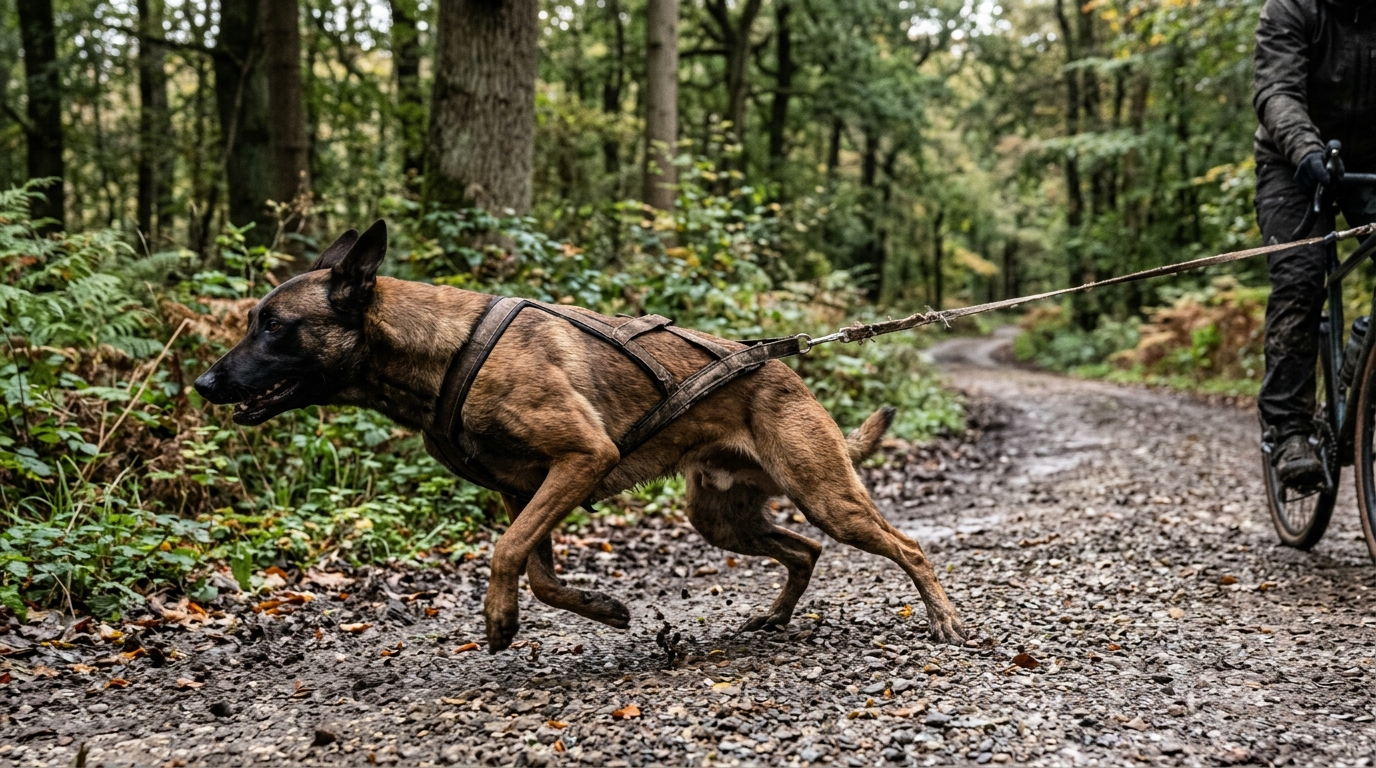
So you’re eyeing up bikejoring, picturing a smooth ride with your dog pulling ahead on a sunny towpath. It’s a brilliant image, but the reality is that not every dog is built for it. Before you invest in harnesses and bungee lines, you need a clear answer: does your dog have the physical build and the right mindset to do this safely on UK roads?
Is my dog the right size and weight for bikejoring?
The short answer is that your dog should weigh roughly 20% to 30% of your combined weight to bikejor safely. If you weigh 75kg, a 20kg dog sits comfortably in the sweet spot. If the dog is significantly heavier, braking on a steep UK hill becomes a genuine hazard.
To check the weight ratio in practice, grab a scale, weigh your dog, add your own weight, and see if the dog’s share lands between a fifth and a third. If it’s higher, you’ll need a much sturdier attachment and a lot more training before you’re road-ready.
Build makes a real difference too. Deep-chested breeds like Pointers and Huskies have a larger thoracic cavity, which distributes pulling force evenly across the spine. Flat-chested dogs, such as some terriers, can feel the strain in the lumbar area, raising the risk of a slipped disc.
Age and health are non-negotiable. Senior dogs or those flagged for hip dysplasia on a vet check-up should steer clear of high-impact pulling until they’ve built a solid foundation of core strength.
The Mental Requirements: Drive vs. Reactivity
High drive is the engine that powers a good bikejorer; reactivity is the brake that can smash it. Drive is a focused, eager desire to chase a moving target – think a Border Collie that bolts after a squirrel and then returns to you for direction. Reactivity, by contrast, is fear-driven barking or lunging at stimuli such as passing cars or other dogs.
Owners often mistake a dog barking at a squirrel for road-ready confidence. The real red flag list for reactivity includes:
- A fixed stare and growl at passing traffic
- Sudden lunges when a car horn sounds
- An inability to settle when a cyclist passes by
The thing is, you need to test this safely. From a distance, walk your dog past a stationary bike or a scooter on a quiet residential road. If the dog watches the wheels, stays loose on the lead and looks to you for guidance, you’ve got drive. If it fixates, snaps or tries to chase the moving object, the dog is reacting out of fear – a dangerous trait for UK roads where cars can appear unexpectedly.
Recall training is the safety net that turns drive into control. Practising recall cues makes the switch from walk to bike much smoother, especially when the dog is distracted by a passing delivery van. You can read more about our training approaches on the blog.
Breed-Specific Suitability: Sighthounds vs. Working Breeds
Not every high-energy breed is a perfect bikejorer, but patterns emerge across the UK population.
Sighthounds and sighthound crosses – Very fast, but most are built for short bursts; Eurohounds are the exception, bred for distance. Brake gradually and use a bungee line so the dog isn’t jolted.
Working Breeds (Border Collies, Siberian Huskies, Malamutes) – These dogs boast both drive and endurance, thriving on varied terrain. The downside is mental boredom. Without sufficient mental stimulation, they can become reckless, pulling harder than you can control. Owners stress the need for regular off-lead work to keep focus sharp.
Crossbreeds – Eurohounds, a popular UK mix of sighthound and working-breed lines, often hit the sweet spot. They have deep chests for pulling, high drive for speed, and a temperament that tolerates traffic. That mix makes them some of the most balanced bikejorers.
The “At-Home Suitability Test” (UK Safety Context)
Think of this as your pre-flight checklist before you invest in a bike attachment. You only need a long line (5-7m), a proper pulling harness, and a quiet street.
1. The Walk Test
Attach the pulling harness (like the specialist Non-stop Freemotion) and lead the dog on a long line. Walk at a brisk pace. Does the dog pull constantly, or can you keep a steady rhythm? Issue a “stop” cue. If the dog halts within two steps, you’ve got basic control. If it barrels on, you need more training before getting on the saddle.
2. The Traffic Test
Choose a low-traffic cul-de-sac and walk the line parallel to the road. Observe whether the dog ignores passing cars or fixates on them. A dog that fixes on traffic will be a hazard on a bike, especially under Rule 57 of the UK Highway Code, which legally requires dogs to be under close control near traffic.
3. The Equipment Test
Slip the harness on. Does the dog instinctively try to pull forward, or does it look confused and lag behind? A harness shaped for a deep chest encourages a forward-leaning stance, which is exactly what you want for bikejoring. Budget options work but demand meticulous sizing – straps can snag on the dog’s fur if the fit is off.
If any of these steps raise a red flag, pause the purchase and focus on obedience work first.
Need a quick reference while you test? Get the Free Canicross Starter Checklist – it’s a handy one-page sheet that keeps your suitability test and kit choices on track.
Common Pitfalls: Injury and Equipment Safety
A fair few new bikejorers overlook the back-stress factor. Sudden stops, especially downhill, jolt the dog’s back and neck. Brake early and gradually, and keep descents slow.
Cheap harnesses are another trap. Low-cost webbing can snap under tension, leaving the dog unrestrained and you in a panic. A broken harness breaches the Highway Code rules on traffic control, meaning it’s not just unsafe, it’s a liability.
Equipment failure isn’t just about the harness. The Non-stop dogwear Bike Antenna (paid link) uses a strong spring to guide the line over your front tyre. Like any clamp-on part, check it’s tight before every ride, especially after wet ones.
See Non-stop dogwear Bike Antenna on Amazon → (paid link)
Essential Gear: What You Actually Need
A specialist pulling harness is the starting point. The Non-stop Freemotion is a strong choice for deep-chested dogs, at around £70–£90. If you’re on a tighter budget and your dog has a husky-type build, the Neewa Sled Pro X-back harness offers decent durability for roughly £40–£60, but you must double-check the sizing. A mis-fit causes armpit rub on long runs.
The bungee line is a must-have. A proper bungee absorbs shock and often has a traffic handle so you can hold the dog close when passing people or horses. Keep the line itself clear of your front wheel: that’s the job of the bike antenna. Budget-conscious riders often opt for cheaper lines, which provide similar stretch at roughly half the price, though they often lack the extra swivel that prevents the line from tangling on rough terrain.
Don’t skip the bike antenna. It keeps the lead out of the front wheel’s path, a small add-on that can prevent a nasty tumble. For those who prefer a cheaper route, basic biker sets do the job, but they are best suited to calmer dogs and less aggressive pulling. If you want to know what gear we actually trust, read more about the Mud and Paws Team.
Bikejoring Suitability Checklist
| Breed Type | Key Strengths | Key Considerations |
|---|---|---|
| Sighthounds | Excellent stamina and speed | Sensitive to abrupt stops; use longer bungee lines |
| Working Breeds | High drive and endurance | Prone to mental boredom; requires off-lead work |
| Crossbreeds (Eurohounds) | Balanced temperament and power | Often hit the sweet spot for UK conditions |
| Flat-chested dogs | N/A | Higher risk of lumbar strain and disc issues |
| Deep-chested dogs | Efficient force distribution | Ideal for pulling; better power transfer |
| Senior dogs | N/A | Avoid high-impact pulling until core strength is built |
What to Do Next
You now have a clear checklist: assess size and build, confirm genuine drive, run the at-home tests, avoid the common injury traps, and choose gear that matches your dog’s shape and your budget. If the results line up, bikejoring can become a brilliant way to burn energy and deepen the bond with your dog safely.
If you have questions about getting started, feel free to contact us. Ready to put the plan into action? Grab our free Canicross Starter Checklist to keep your testing routine organised and make sure you don’t miss any steps.
Enjoy the ride, stay safe, and remember: the right preparation is worth the investment, and a well-matched dog-bike team is a joy to watch on any UK lane.
Related Guides
For a complete overview, see our What Is Bikejoring? A UK Beginner’s Guide.
Further Reading
As an Amazon Associate we earn from qualifying purchases.
Note: General guidance only, verify details with a qualified professional or official source.