How to Choose the Right Canicross Harness for Your Dog (Fit Their Shape, Not Just Their Size)
As an Amazon Associate we earn from qualifying purchases. This page contains affiliate links — if you buy through them, we earn a small commission at no extra cost to you.
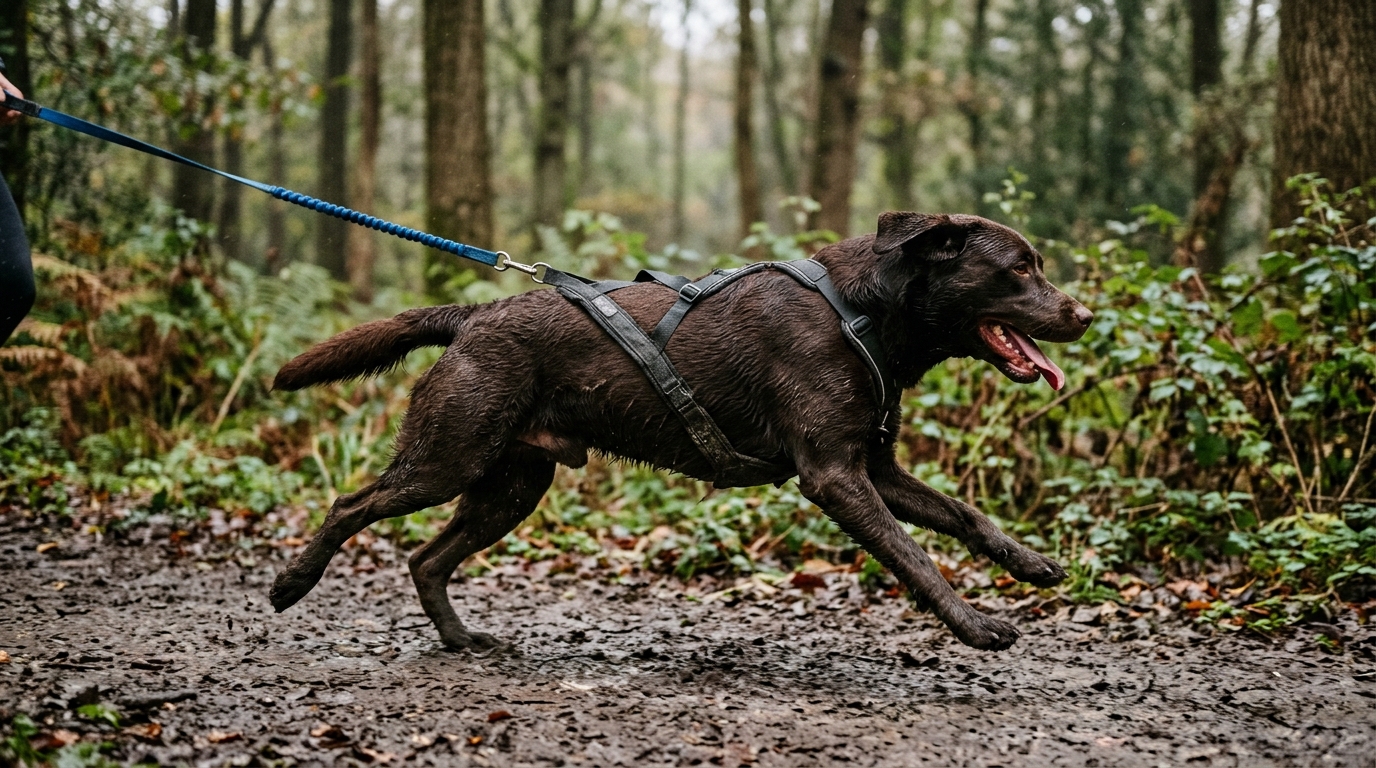
The cheap walking harness that keeps slipping off your Labrador isn’t a sizing problem—it’s a geometry problem. Most dog owners chase the label size instead of matching the harness to their dog’s actual shape. If you’ve had enough of chafing straps and harnesses that slide around mid-run, this guide walks you through matching your dog’s body geometry to the right canicross harness, the measuring process, and the materials that survive UK weather. By the end you’ll know exactly what to look for—and where to click for a no-risk starter checklist.
Why Your Dog’s Body Shape Changes Everything
A one-size-fits-all label assumes every dog is a perfect rectangle, but real dogs are anything but. A deep-chested Labrador can pull a harness straight off a slender Whippet, even when both are listed as “Medium”. The geometry of the dog determines which harness geometry will sit comfortably and stay in place.
- Deep-chested dogs – breeds like Labradors, Boxers and Staffies have a broad ribcage that extends well past the shoulder blades. A Y-front harness that sits between the shoulders, with a wide chest strap, keeps the pull line centred and prevents the strap from digging into the armpits.
- Sighthounds – Whippets, Greyhounds and Salukis are narrow-framed but also deep-chested. They need extra girth adjustment and a soft lining to avoid the ribs and spine rubbing against hard edges. Both Y-front and H-back can work, provided the chest plate is slim enough to slip into the narrow frame.
- Barrel-chested / round-bodied dogs – Bulldogs and some spaniels have a short, round torso. Standard harnesses tend to rotate, pulling the D-ring under the belly. Look for a front-connection point or a belly strap that stabilises the harness and stops it from rolling.
- Small / narrow dogs – Jack Russells and Miniature Pinschers have lightweight frames; bulky padding restricts shoulder movement. A minimal, low-profile harness with a high-back attachment is the sweet spot.
If a harness sits low on the shoulders, expect reduced stride; if it rotates, expect chafing under the ribs. The Royal Kennel Club’s guide on breed anatomy explains why the shoulder structure varies so much between breeds—worth reading before you buy.
Which Attachment Point Does Your Dog Need?
The line of pull is the single most critical factor for a smooth run. Misplacing the bungee attachment turns a well-fitted harness into a wobbling nightmare.
- High back (between the shoulders) – This is the classic canicross spot. It aligns the pull through the dog’s centre of gravity, letting the shoulders move freely. Most medium-to-large pulling dogs benefit from this placement.
- Low back (just above the tail) – Borrowed from skijoring and bike-joring, this shifts the load to the hips. It’s useful for very strong pullers who need extra core support, but it can feel awkward for beginners.
- Front ring (on the chest) – Designed for “no-pull” walking harnesses, a front clip redirects the dog’s momentum and shortens the stride. Using it for canicross throws the dog off balance and can even cause shoulder strain. avoid front-clip harnesses for running.
- Y-front vs H-back – A Y-front sits between the shoulder blades, keeping the pull line clean for sport use. An H-back sits over the shoulders, which is fine for general walking but can interfere with the natural extension of the front legs during a sprint.
Beginners often buy a front-clip “no-pull” harness thinking it’s safer, only to discover their dog can’t extend its stride properly. If you’re after speed and comfort, a high-back Y-front is the sensible choice.
UK Weather and Terrain: What Harness Materials Work Best
British weather throws a curveball at every runner. A harness that feels fine on a dry summer morning can become a mud-sopping, skin-irritating mess after a rainy trail in the Peak District.
- Breathability – Neoprene-backed harnesses trap heat and moisture, leading to sweat rashes on damp days. Mesh-lined or perforated foam straps let the air circulate, which keeps the skin drier on humid runs.
- Drying time – Nylon webbing dries within minutes, while closed-cell foam can stay soggy for hours in winter. A quick-dry harness saves you from a 12-hour “wet-dog” after a muddy loop.
- Mud repellence – Light-coloured webbing shows splatter instantly, but dark harnesses hide the grime better. The trade-off is that dark straps can heat up in direct summer sun, so a reflective strip can be handy for visibility.
- Cold snaps (0–5 °C) – Fleece-lined harnesses, like the Neewa Perfect Fit, keep a dog cosy on frosty mornings, but they also hold moisture. Pair a fleece-lined harness with a separate lightweight waterproof coat for long winter runs.
- Terrain-specific wear – Trail runs on rocky paths demand abrasion-resistant outer fabric; road runners can prioritise lighter weight.
In practice, a mesh-lined Y-front with nylon webbing stays comfortable and dries quickly, whereas a fully padded foam harness can stay damp for hours, leading to skin irritation.
How to Measure Your Dog for a Canicross Harness (Step‑by‑Step)
Getting the right numbers stops the guesswork. Use a soft measuring tape and follow these steps – measuring a standing dog, not a lying one, is crucial because the chest compresses by up to 5 cm when the dog is on its side.
- Girth – Wrap the tape around the widest part of the chest, just behind the front legs. This is the single most important measurement. Keep the tape snug but not tight; you should be able to slide two fingers under it.
- Neck circumference – Measure at the base of the neck where the harness will sit. Again, leave a finger-width of slack.
- Bridge length – From the base of the neck to the base of the tail. This tells you how low the back panel will sit; a too-long bridge can restrict the stride.
- Between-shoulder width – For deep-chested dogs, measure the distance between the shoulder blades. This helps you decide if a Y-front will fit without rubbing.
If your dog falls between sizes: most UK-available harnesses have an adjustable range of about 2–3 cm. Size up and tighten the straps for a snug fit; a harness that’s too small will dig into the armpits, while one that’s too large will rotate.
Common UK mistake: measuring the girth while the dog is lying down. The chest flattens, leading to a harness that’s constantly too tight under the armpits. Measure a standing dog on a flat surface for the most reliable result. It’s a small detail that makes a big difference.
You now have exactly what to look for – Get the Free Canicross Starter Checklist to keep these steps handy on your next run.
Common Canicross Harness Mistakes (and How to Spot Them)
Even seasoned runners slip up. Spotting the signs early saves you a vet visit and a lot of frustration.
- Harness sits too low on the shoulders – If the strap hangs more than 2 cm below the shoulder point, the dog’s scapula can’t rotate fully. You’ll see a shortened stride or the dog stopping mid-run to readjust.
- Chafing under the armpits – The most common gripe in deep-chested breeds. Look for hair loss, redness, or a dog that refuses to wear the harness. It shows up when a narrow-framed harness is forced onto a Labrador.
- Harness rotation – Barrel-chested dogs often experience the D-ring sliding to the belly during a run. The symptom is the dog constantly shifting position or the line pulling from an odd angle.
- Neck opening too tight – If the dog coughs or pants excessively when you start pulling, the neck strap is restricting airflow.
- Cheap Amazon harnesses – Many low-priced options use stiff webbing that digs into the skin and buckles that pinch. The savings rarely outweigh the risk of a vet bill for a pressure sore.
if you notice any of these signs, it’s time to reassess the fit or the harness type. A well-fitted Y-front with adjustable chest straps will usually eliminate the first three issues.
Best Canicross Harnesses for UK Dogs (Honest Recommendations)
Below are the picks that consistently win praise from UK owners, plus the trade-offs you need to weigh. Prices are approximate UK retail ranges; exact figures vary between retailers.
Non-stop Freemotion harness 5.0 (paid link) (~£70–£90)
The go-to for serious pulling dogs. It’s built for serious pulling – deep-chested Labradors and GSPs stay centred and breathe easier. The downside is that it’s a single-purpose harness: no handle for obstacle help, and the fit is activity-specific, so it feels a bit tight on casual walks. If you’re training for distance canicross, this is worth the investment; otherwise, you might prefer a more versatile option.
Cheaper alternative: Neewa Sled Pro (roughly £40–£60) – an X-back harness built for husky-type shapes. Good value if your dog has that build, but sizing is fiddly, so measure neck and chest against Neewa’s chart.
Zero DC Short (~£43–£50)
A lightweight, highly adjustable harness that works well for small breeds and deep-chested dogs alike. The two-clip entry system suits dogs that hate stepping into a harness. The main caveat is fit sensitivity: if your dog’s proportions don’t line up with the Y-front geometry, you’ll get armpit rubbing. For a first-time buyer with a Labrador or Boxer, the Zero DC Short is the honest pick, provided you measure meticulously.
A note on cheap “no-pull” harnesses: budget harnesses such as TrueLove’s Front Line are walking harnesses with a chest clip. They’re useful for teaching a dog to jog beside you, but they aren’t canicross harnesses and aren’t designed for a dog to pull you.
Zero DC Faster (~£50–£55)
Designed for deep-chested pullers like Pointers. It’s made for free movement and dries quickly, and it stays snug without slipping once sized correctly. The trade-off mirrors the Short: sizing can be tricky for unusual body shapes, and colour options are limited. If you’re a beginner looking to step up from a basic harness, the Faster offers a smoother transition.
Cheaper alternative: Neewa Sled Pro (see above), if your dog is husky-shaped rather than pointer-shaped.
Ruffwear Omnijore joring system (paid link) (belt and line system)
Buy Ruffwear Omnijore joring system on Amazon → (paid link)
Strictly, this is your end of the line rather than the dog’s: a hip belt and towline designed to pair with a pulling harness. It feels secure under load. The quick-release towline and hip-belt pockets are a belt-and-braces bonus for long-distance runs. Fit adjustment is the biggest hurdle and can be fiddly, and you’ll still need a harness that suits your dog’s shape. If you’re committed to multiple pulling sports (canicross, bike-joring, skijoring), the Omnijore is worth the splurge.
Budget alternative: Neewa Canicross System (~£90–£115 bought separately) – highly adjustable and sits low on the hips, but it lacks the polished hardware of the Omnijore. It’s a solid, value-focused choice for regular runners.
Ruffwear Roamer Bungee Leash (~£50–£55)
Pairs well with any of the above harnesses. The stretch webbing cushions jolts, making long runs kinder on the dog’s joints. The downside is the elastic can lose its snap after heavy use, which is why owners with very strong pullers sometimes prefer a stiffer, purpose-made canicross bungee. If you run moderate distances on mixed terrain, the Roamer is a reliable companion.
Budget alternative: Neewa Bungee Line (~£22–£30) – lightweight and effective, but occasional hardware issues have been reported. Perfect for occasional runs, not for daily high-intensity sessions.
Quick Decision Tool: Which Harness for Your Dog?
Answer these quick questions, then match them to the recommendation that fits your budget and running goals.
- Is your dog deep-chested? → Y-front harness. Top picks: Zero DC Short (budget) or Non‑stop Freemotion (premium).
- Is your dog a sighthound (narrow, deep chest)? → Narrow Y-front with extra girth adjustment. Zero DC Short or Faster work well.
- Barrel-chested or round-bodied? → Look for a front-connection or belly-strap design. Try several styles on your dog at a club taster before buying, as fit varies more with these shapes.
- Small or narrow dog? → Minimal, lightweight harness with high-back attachment. Zero DC Short in the smallest size is a good place to start.
- Just starting out and watching the wallet? → Borrow or try harnesses at a taster session first, then buy one proper pulling harness that fits rather than two cheap ones that don’t. The Neewa Sled Pro (roughly £40–£60) is good value for husky-shaped dogs.
- Committed to distance running or multiple pulling sports? → Non‑stop Freemotion (~£70–£90) with a well-fitted belt and line such as the Ruffwear Omnijore system deliver the performance and durability you’ll need.
Don’t spend more than £80‑£120 before you’ve confirmed your dog’s shape and measured correctly. Once you know the geometry, the price difference between a solid mid-range harness and a premium one becomes a clear value decision.
Frequently Asked Questions
Can I use a regular walking harness for canicross?
No. Walking harnesses sit higher on the shoulders and often have front-clip attachments, which restrict the dog’s stride and can cause shoulder soreness over time. A dedicated canicross harness aligns the pull through the shoulders, keeping the motion natural.
How tight should the harness be?
It should be snug enough that you can’t rotate it more than a finger-width around the body, but you must still be able to slip two fingers under the chest and armpit straps. If the harness shifts more than 2–3 cm when the dog pulls, it’s too loose.
Is a more expensive harness always better?
Not necessarily. A £150 harness that doesn’t suit your dog’s shape will perform worse than a £70 model that fits perfectly. Fit and material suitability for UK weather matter more than price alone.
What material should I look for in rainy conditions?
Mesh-lined straps with nylon webbing are the sweet spot – they breathe, dry quickly, and resist mud. Avoid neoprene-backed designs that trap moisture and cause skin irritation on damp runs.
How often should I replace my dog’s harness?
If you notice fraying, broken buckles, or persistent chafing despite a proper fit, it’s time to replace it. In wet UK climates, a well-maintained harness can last 12–18 months with regular cleaning.
Canicross Harness Quick Comparison
| Harness | Price Range (UK) | Best For | Key Trade-off |
|---|---|---|---|
| Non‑stop Dogwear Freemotion | ~£70–£90 | Deep-chested pullers, distance running | Single-purpose; no handle |
| Zero DC Short | ~£43–£50 | Deep-chested and small breeds | Fit-sensitive; can rub armpits |
| Zero DC Faster | ~£50–£55 | Deep-chested pullers (Pointers) | Tricky sizing for unusual shapes |
| Ruffwear Omnijore (belt and line) | Premium | Your end of the line for several pulling sports | Fiddly adjustment; harness sold separately |
| Neewa Sled Pro | ~£40–£60 | Husky-type shapes on a budget | Sizing fiddly; X-back suits fewer shapes |
| Neewa Canicross System | ~£90–£115 bought separately | Regular runners on a budget | Lacks polished hardware |
Ready to Start?
Choosing the right canicross harness boils down to three steps: identify your dog’s body shape, measure the key dimensions accurately, and pick a material that copes with Britain’s wet, muddy weather. Once you’ve nailed those basics, the price point becomes a clear decision – you’ll know whether a premium option like the Non‑stop Freemotion is worth the extra spend or if a budget-friendly Neewa Sled Pro will do the job.
Now that you’ve got the framework, the next logical step is to get a handy reference you can keep on your phone or print out. Grab our free Canicross Starter Checklist and tick off each measurement and feature before you click “add to basket”.
If you want to know more about the Mud and Paws team behind this guide, or get in touch with your own questions, we’re always happy to help.
Happy running, and may your next run be chafe-free and smooth as a well-fitted harness.
Related Guides
References
As an Amazon Associate we earn from qualifying purchases.
Note: This guide provides general advice only. Always consult a qualified professional (e.g., a vet or certified canine sport instructor) for specific recommendations for your dog. Prices and product availability may vary.