What to Pack for a UK Dog Walk (The Mud & Paws Checklist)
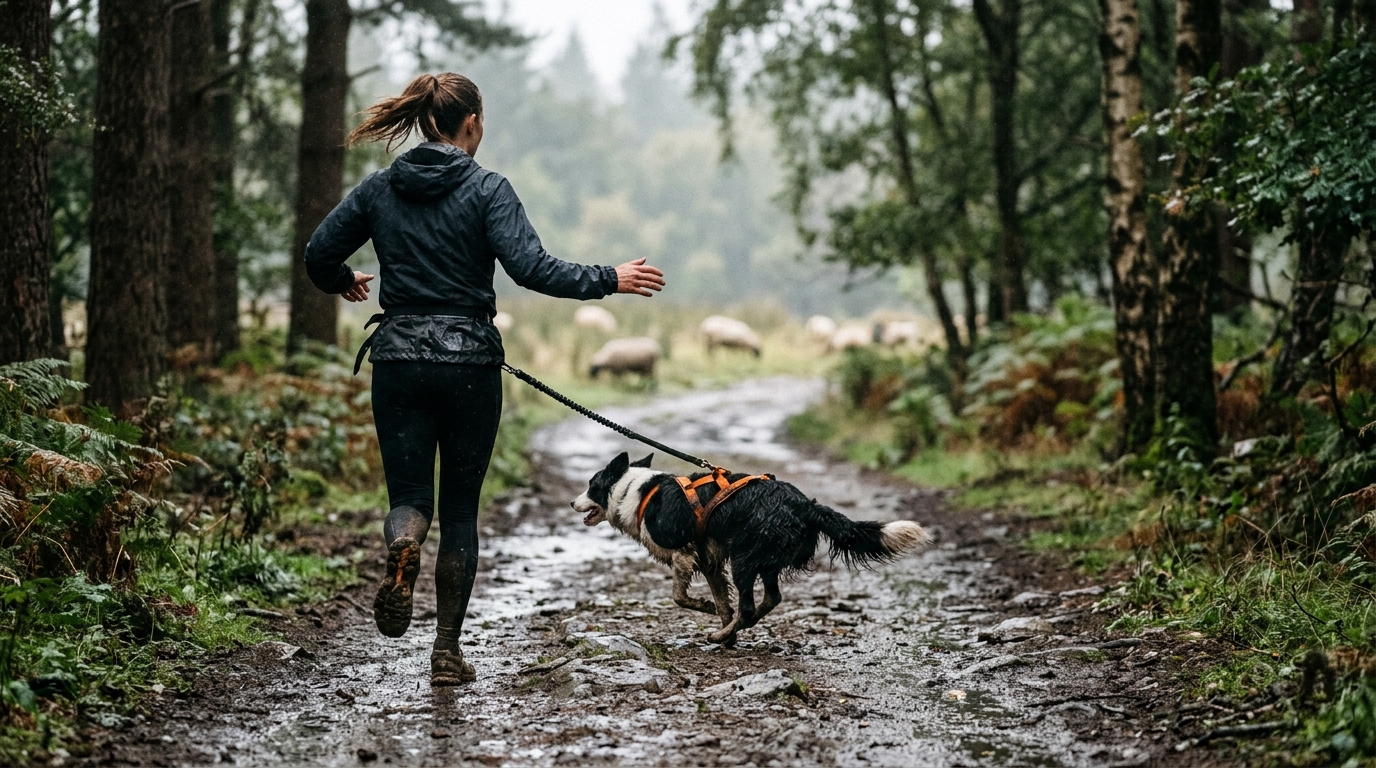
Heading out on a UK trail with your dog means preparing for four seasons in a single afternoon. Between sudden Peak District downpours, boggy paths, and strict livestock rules, packing the right gear is the difference between a brilliant weekend and a miserable, muddy rescue mission. This checklist strips away the guesswork, giving you a practical packing plan that covers rain, mud, and trail safety, so you can focus on the walk instead of worrying about what you forgot.
Safety & First Aid: The Non-Negotiables
A trail mishap can turn a lovely walk into a rescue call faster than a sudden downpour. The basic medical kit isn’t optional; it forms the baseline for any responsible owner heading into the hills.
- ID: Microchip tag plus a sturdy collar with a local UK phone number. It is a legal requirement in the UK for your dog to be microchipped and wear an ID tag in public. Put a mobile number on the tag, so whoever finds the dog reaches you on the hill, not at home.
- First-Aid Kit: Tweezers for ticks, antiseptic wipes (bramble cuts are a massive cause of minor injuries on UK trails), and waterproof bandages sized for both you and your dog.
- Emergency Card: Slip a small card into the kit with your vet’s details and an “In case of emergency” contact. People often forget to include the vet’s after-hours number.
- The Mud Factor: Thick brambles and jagged rocks are far more common in the British countryside than in dry-climate hikes, so a strong antiseptic wipe is a must.
Mini-checklist:
- Microchip tag & collar ID
- Tweezers, antiseptic wipes, waterproof bandages
- Emergency contact card
- Quick reference: “Check for ticks every 30 min”
Worth packing: antiseptic wipes. Even a small bramble cut can become infected if you can’t clean it, so don’t skimp on the basics.
What Navigation and Communication Gear Do You Need?
You need a physical Ordnance Survey map, a basic compass, a loud dog whistle, and a fully charged 10,000 mAh power bank. Relying solely on a phone’s GPS is a risk on UK trails, where signal drops the moment you step into a dense wood or drop into a valley.
- Paper Map & Compass: A good paper map and compass cost roughly £15 and never run out of battery.
- Dog Whistle: A must-have for recalling a dog that’s slipped its lead in thick mist. A whistle carries much further than your voice in wind and rain, and it sounds the same whoever blows it.
- Power Bank: A 10,000 mAh unit ensures your phone stays alive for emergency calls. You’ll thank yourself when the battery icon hits red.
- Countryside Code: In the UK, dogs must be kept on leads near livestock. Failing to do so can result in a fine and an angry farmer. The RSPCA highlights that keeping your dog under close control near sheep isn’t just polite – it’s a strict legal requirement.
The most common mistake is forgetting to check the map before you set off. Many UK hikers assume the trail will be clearly marked, but signage can be sparse on remote routes.
Comfort & Protection: Gear for the British Weather
Rain, mud, and sudden changes in temperature are par for the course across the UK’s hills. The right gear keeps both you and your dog comfortable, and prevents buying cheap replacements later.
Waterproof Jacket
A breathable, waterproof jacket (think Gore-Tex-type membrane) is worth the investment. Taped seams are what keep a jacket dry in a proper Lake District downpour. Look for a jacket with a snug collar and adjustable cuffs – the wind can be brutal on exposed ears.
Dog Boots vs. Wax
Boots are often more effective than wax for preventing cuts from sharp rocks and muddy splinters. Even expensive kit needs checking: straps stretch and soles wear. Wax can work for light mud, but on a typical UK trail it wears off after a few hours and offers little protection against jagged stones.
Paw Wipes
Sticky mud and grit are a common irritant. A pack of biodegradable paw wipes lets you clean each paw before you hit the car. Wiping paws straight after a walk stops grit sitting between the toes on the drive home.
Harness
A well-fitted harness distributes pressure evenly on longer hauls. Deep-chested dogs often need a half-size up to avoid a tight fit turning into a chafing nightmare.
A frequent mistake is assuming a single pair of boots will suit all terrain. Many weekend warriors pack only one pair and end up with ripped paws on a rocky ridge. Pack a lightweight, low-profile boot for dry sections and a sturdier, mud-proof pair for wetter ground.
Waste Management & Hygiene: Leave No Trace
A clean trail is good for everyone – and it keeps you on the right side of the law. As we often discuss on the blog, the Countryside Code explicitly states you must pick up after your dog, even in open countryside.
- Biodegradable Bags: Carry at least one bag per mile; they break down quickly and avoid littering.
- Hand Sanitiser: A small pump bottle keeps your hands clean before you touch your car keys or the kitchen sink.
- Boot Cleaning Kit: A compact brush (think old toothbrush size) wipes mud from your boots before you get into the car – it saves the car’s carpet from turning into a mud pit.
Car tip: A simple brush and a microfiber towel are the only way to keep the interior of a hatchback clean after a day in the Lake District’s boggy paths.
Food & Water: Fuel for the Adventure
A thirsty, under-fed dog is a miserable dog, especially when the weather flips from sunny to soggy in minutes.
- Collapsible Water Bowl: Silicone bowls fold down to fit in a waist pack and add barely any weight.
- Water: Bring more than you think you need – a good rule is 1 L per hour per dog. Freezing a water bottle overnight gives you a chilled supply for the first half of the hike and a handy ice pack for the back of the pack.
- High-Calorie Snacks: Freeze-dried kibble or specialised dog energy bars keep stamina up on longer treks.
The most common mistake is under-estimating water needs. It’s easy to pack too little for a long walk, so plan for double the amount you expect to need.
How to Pack Your Dog’s Trail Bag
Line the bag with a dry sack UK weather is entirely unpredictable. Use a cheap waterproof roll-top liner inside your daypack to guarantee the first-aid kit and spare layers stay bone dry, even if the outer bag gets soaked.
Keep the first-aid kit at the top If your dog catches a paw on a sharp rock, you don’t want to be emptying food bowls and spare jackets onto the wet grass to find the bandages. Keep medical supplies right under the main zip.
Balance the water weight Water is the heaviest thing you’ll carry. Keep bottles close to your spine rather than in outer mesh pockets to stop the bag swinging when you scramble over stiles or steep rocks.
Clip the whistle and wipes to the outside Fast access to a recall whistle and a few paw wipes makes dealing with sudden livestock encounters or muddy puddles far less of a faff.
The Mud & Paws Rule of Three
A simple mental shortcut that sticks in your head better than a long list.
- Rule 1 – 3 Days of Food: If you get stuck, you’ve got enough for a short emergency.
- Rule 2 – 3 Litres of Water: Roughly 1 L per hour per dog, plus a safety margin.
- Rule 3 – 3 Essential Safety Items: ID tag, first-aid kit, and a paper map with compass.
Visual cue:
- ID tag & collar
- First-aid kit
- Map & compass
Keep this trio in mind, and you’ll never feel unprepared again.
Quick Answers
Do dogs really need boots for UK hiking?
It depends entirely on the terrain. For soft grassy hills, natural paws are fine, but if you are tackling rocky ridge routes like Tryfan or areas with sharp slate, a set of well-fitted boots will stop jagged cuts and save you a pricey trip to the vet.
How much water should I carry for my dog?
A sensible baseline is roughly one litre per hour of walking for a medium-sized dog, plus a solid safety margin. Dogs pant to cool down and lose moisture quickly, so always carry more than you think you need, especially on exposed moorland with no natural streams.
Can I let my dog off the lead in the Peak District?
You can, but only if you have absolute recall and there is no livestock around. During bird breeding season (1 March to 31 July), dogs must be kept on a short lead on open access land, and they must always be leashed around sheep and cattle to avoid fines.
Essential UK Trail Gear Categories
| Category | Key Item | Purpose |
|---|---|---|
| Safety | Paper Map & Compass | Never runs out of battery and saves you from getting lost in fog |
| Safety | Dog Whistle | Can be heard up to 200m away, even in heavy rain |
| Comfort | Waterproof Jacket | Breathable membrane with taped seams keeps you dry in sudden downpours |
| Comfort | Dog Boots | More effective than wax for preventing cuts from sharp rocks and mud splinters |
| Hygiene | Biodegradable Bags | Carry at least one bag per mile to keep the trail clean |
| Hygiene | Boot Cleaning Kit | Compact brush wipes mud from boots before getting into the car |
| Food | Collapsible Water Bowl | Silicone bowl folds down to fit in a waist pack |
| Food | Water | Bring more than you think you need, roughly 1L per hour per dog |
Ready to Start?
Preparation makes the difference between a soggy, stressful walk and a joyous adventure across the Yorkshire Dales or the Scottish Highlands. Remember: a waterproof jacket, sturdy boots, a solid first-aid kit, and a clear map are your non-negotiables. Pack the waste bags, water, and snacks, then run through the Mud & Paws Rule of Three before you head out.
Feeling ready? Get the Free Canicross Starter Checklist to tick every item off with confidence. If you have any lingering questions, get in touch – the Mud and Paws Team is always happy to help you sort out the details.
Happy trails, and may your paws stay dry!
Explore More Topics
Go deeper on specific topics:
- Dog Backpacks UK: How to Size and Load Them Safely
- Best Dog Cooling Vest UK for Summer Trails
- Should My Dog Wear Boots on the Trail?
- Dog Hydration on the Trail: How Much Water?
References
Note: General guidance only, verify details with a qualified professional or official source.