How Much Water Does Your Dog Need on a Trail Run?
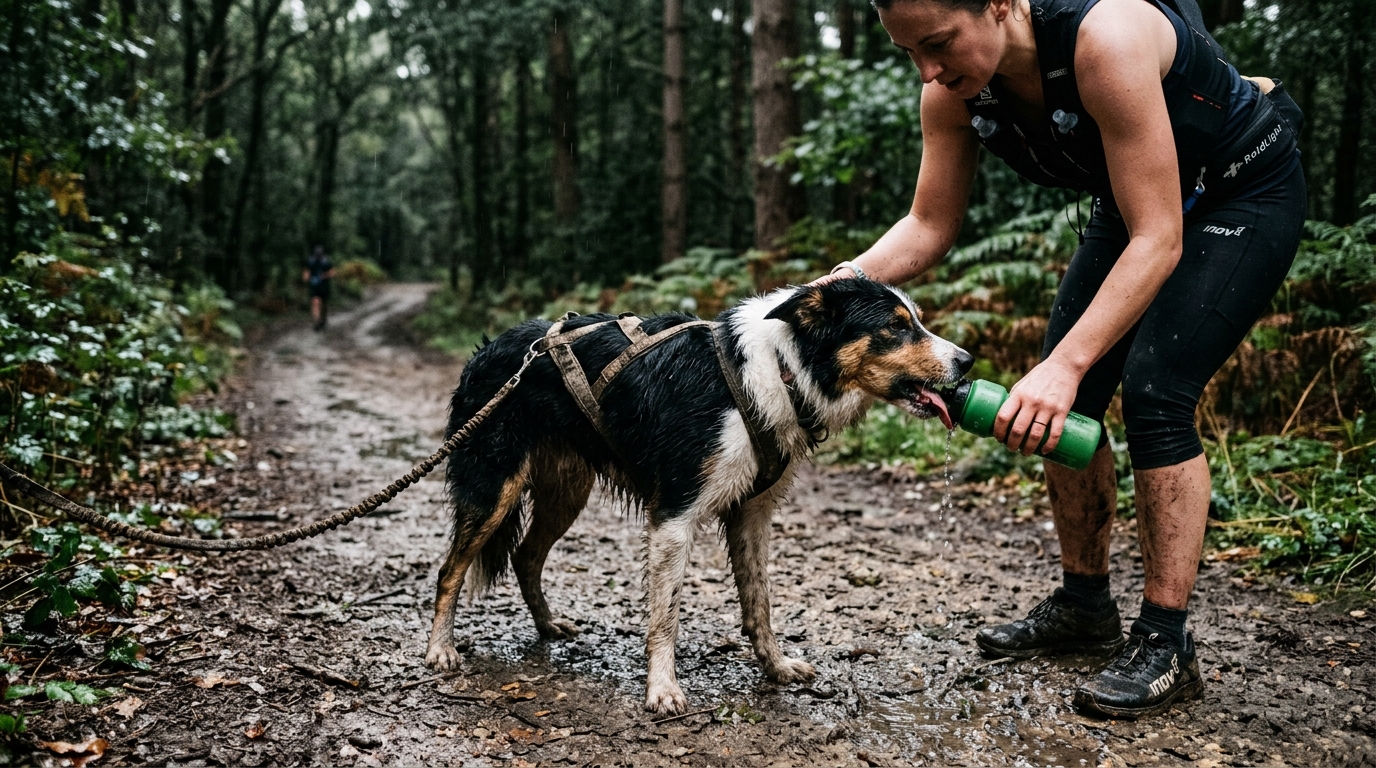
Most runners obsess over their own hydration on the trail, assuming their dog will just drink when thirsty. The reality is, dogs often push through until they’re already dangerously dehydrated. Figuring out how much water to carry for canicross or a long hike isn’t a guessing game—it comes down to a simple calculation based on weight, temperature, and effort.
How Much Water Does a Trail Dog Actually Need?
A healthy dog needs roughly 40ml of water per kilogram of body weight per hour of exercise. For a typical 25kg dog on a moderate run, that means carrying about one litre per hour. You’ll need to increase this base amount by 10% for intense pulling, or when UK summer temperatures push past 15°C.
That baseline comes straight from The Kennel Club’s guidance on canine exercise. From there, you tweak the total based on temperature and effort.
| Variable | How to adjust |
|---|---|
| Base | 40 ml × kg × hours |
| Temperature multiplier | Add 20 ml × kg for every 5 °C above 15 °C. |
| Exertion factor | Boost the final figure by 10 % if you’re doing intense canicross, steep climbs, or sprint intervals. |
| Over‑hydration warning | Gulping too much too fast can lead to hyponatraemia (water intoxication). If you’re hitting the calculated amount in a single session, pause and let the dog sip slowly. |
Example: A 25 kg Border Collie tackling a 10 km, 20 °C run.
Base: 40 ml × 25 kg × 1 hour ≈ 1 000 ml.
Temperature: (20 °C – 15 °C) ÷ 5 °C = 1 → add 20 ml × 25 kg = 500 ml.
Exertion: 10 % of 1 500 ml = 150 ml.
Total ≈ 1 650 ml per hour – roughly 1.6 L. That extra 250ml over the base rate is what you need for a proper hill run on a warm day.
If you’re using a high‑performance harness like those reviewed on our blog, the extra pulling effort justifies the 10 % bump.
Why this matters: Most owners assume “a litre of water per hour” is enough for any dog, but the calculation shows a 30‑kg Labrador on a 30 °C hill climb needs almost 2.5 L. Under‑estimating can leave a dog gasping, while over‑filling a bowl invites hyponatraemia – a very real risk highlighted by veterinary charities like the Blue Cross.
Signs of Dehydration vs. Over‑Hydration
Spotting the problem early stops a crisis on the trail. The first red flags show in the dog’s mouth and gait.
Dehydration – the signs to watch for:
- Heavy panting that doesn’t ease with shade.
- Dry gums and a sticky tongue.
- Lethargic posture, eyes appearing sunken.
- Slightly sticky nose that feels tacky to the touch.
Over‑hydration (hyponatraemia) – the gripe that comes up less often but is just as dangerous:
- Bloating or a visibly distended abdomen.
- Vomiting, sometimes with frothy saliva.
- Uncoordinated movement or stumbling.
- Excessive drooling, especially if the dog drinks large gulps at once.
The golden rule: if your dog is gulping water faster than the calculated rate, pause the flow and let them sip. Equally, a dog gulping a lot at once should be slowed down: small sips, more often.
| Condition | Key Signs | Immediate Action |
|---|---|---|
| Dehydration | Panting, dry gums, lethargy | Offer water in small, frequent sips; move to shade; check pulse. |
| Over‑hydration | Bloating, vomiting, wobble | Stop water, offer a dry snack, monitor; if symptoms persist, seek vet help. |
A common error is assuming a dog that refuses a bowl is simply being stubborn. In reality, a nervous dog may reject an unfamiliar container – the “Refusal Factor” – so keep a collapsible cup handy as an alternative.
How to Check Your Dog’s Hydration on the Trail
If you’re unsure whether your dog needs a water break, a quick physical check takes seconds.
Check the gums
Lift the dog’s lip and feel their gums. They should feel slick and wet. If they feel tacky, sticky, or completely dry, your dog is already dehydrated and needs water immediately.
Test the skin elasticity
Gently pinch a fold of skin at the back of the dog’s neck or between the shoulder blades and release it. In a well-hydrated dog, the skin snaps back into place instantly. If it takes a second or two to fall back, hydration levels are dropping.
Monitor the panting
Watch how the tongue sits. A relaxed, wide tongue is normal for cooling down. If the tongue is curled up at the edges, excessively dark red, or the panting sounds raspy, it’s time to stop in the shade and offer small sips.
UK‑Specific Trail Conditions
British trails bring their own quirks. A typical summer day in the Peak District can swing from 12 °C in the early morning to 24 °C on the ridge, and the ground is often a mix of damp peat and dry stone. Here’s what matters:
- Water temperature: In chilly autumn, dogs will shy away from ice‑cold water. Warm it slightly in a thermos or let a bottle sit in your pack for a few minutes. In July, lukewarm water is more appealing than a steaming bottle that will evaporate quickly.
- Heat management: A cooling vest or a wet towel draped over the neck can shave a few degrees off a dog’s core temperature.
- Terrain water sources: Muddy puddles and still ponds may look tempting, but they can carry parasites and blue-green algae, which the PDSA notes is highly toxic to dogs. Carry your own supply for runs longer than 5 km; natural sources are a nice backup, not a primary plan.
So, while the UK offers plenty of scenic streams, the safe route is to plan for self‑supplied water and treat any natural source as a supplement, not a replacement.
Gear Guide: How to Carry It All
Carrying enough water for you and your dog without turning your pack into a brick is a common snag, but it doesn’t have to be a faff. The most “belt and braces” solution is a dedicated dog‑specific backpack: padded straps, a front‑access water pocket, and attachment points for a collapsible bottle.
Backpacks – Look for models with a separate dog‑water compartment and a quick‑release latch. The extra weight sits low, keeping your centre of gravity stable on uneven terrain. Even with a good pulling harness such as the Non-stop Dogwear Freemotion, carry the water in a pack rather than hanging a bottle from the dog’s collar, which can strain the neck.
Collapsible silicone bottles – These win on space efficiency. A 500 ml bottle folds flat, and a 1 L version fits snugly in most dog packs. Collapsible bowls and bottles with a wide mouth are easiest to fill on the go.
Hydration bladders – For ultra‑long distances (over 2 hours of continuous running), a CamelBak‑style bladder with a dog‑compatible hose can be a game‑changer. The downside is the extra bulk; for most weekend runs a couple of bottles and a small pack is enough.
Practical tip: Freeze a small bottle overnight and tuck it into your pack for a summer run. The melting ice provides a steady, cool drip, and the cold bottle doubles as a makeshift ice pack for a dog’s paws on hot days.
Don’t forget a collapsible cup for the “Refusal Factor” – a simple silicone cup that slips into the pack and can be offered if the dog won’t drink from the bottle.
Common Questions
Can I give my dog electrolytes?
Yes, but usually only on runs lasting well over two hours. For most UK trail runs, plain water is spot on. Adding electrolyte powders unnecessarily can actually upset a dog’s stomach and cause diarrhoea, which makes dehydration worse.
What if my dog refuses to drink from my bottle?
Don’t force it. Nervous or over-stimulated dogs often reject unfamiliar drinking methods. Try offering water in a collapsible silicone cup. If the dog still won’t drink, pouring water over a damp towel for them to lick provides moisture without the pressure of a bottle.
Is it safe to let my dog drink from streams?
It depends entirely on the water source. Fast-flowing streams in areas like the Scottish Highlands or the Peak District are generally fine, but you should avoid stagnant ponds entirely due to the risk of blue-green algae and parasites. Always carry your own water to be safe.
Trail Dog Hydration Calculator
| Dog Weight (kg) | Base Rate (ml/hr) | Temp Multiplier (ml/hr) | Total (ml/hr) |
|---|---|---|---|
| 20 | 800 | 80 | 880 |
| 25 | 1000 | 100 | 1100 |
| 30 | 1200 | 120 | 1320 |
| 35 | 1400 | 140 | 1540 |
| 40 | 1600 | 160 | 1760 |
Before You Buy
You now have the exact UK formula to calculate your trail dog’s water needs, a clear picture of the warning signs for both dehydration and hyponatraemia, and a gear plan that keeps the water flowing without turning you into a pack‑horse.
The next logical step is to put the calculator to work before your next canicross session – plug in your dog’s weight, the expected temperature, and the intensity of your run, then pack accordingly.
Ready to tighten up the rest of your trail prep? Grab the Free Canicross Starter Checklist – it’s a handy companion for planning any outdoor adventure, covering the kit list and the basics so you and your dog are properly set up for the next hill.
If you have specific questions about gear setups or trail routes, feel free to contact us directly, or read more about the Mud and Paws Team to see how we tackle the trails. Stay safe, stay hydrated, and enjoy the run.
Related Guides
For a complete overview, see our Essential Dog Trail Gear UK: What to Pack.
Further Reading
Note: General guidance only, verify details with a qualified professional or official source.