Dog Backpacks UK: How to Size and Load Them Safely
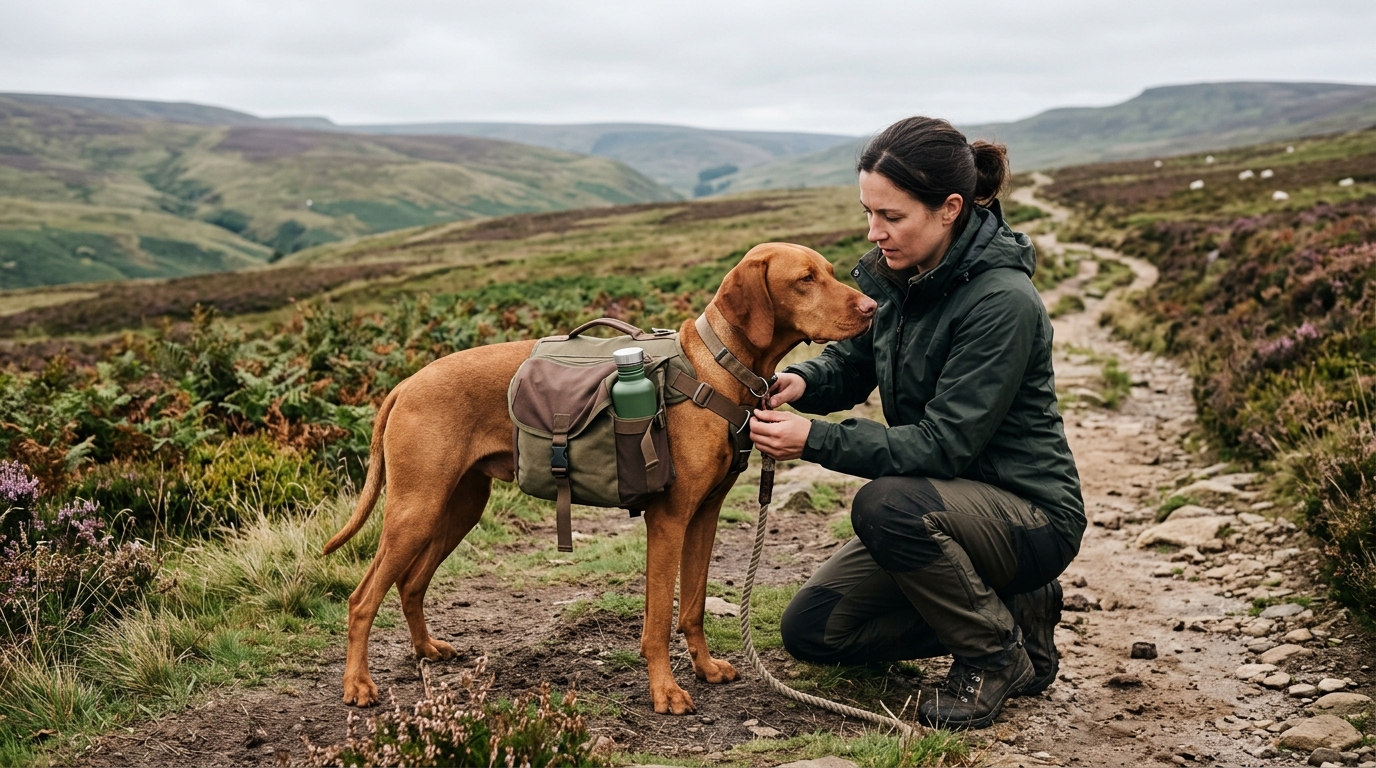
Sticking a bulky rucksack on your dog sounds like a brilliant way to share the load on a hike, until the pack slips and they end up with a nasty friction burn. A poorly fitted or overloaded dog backpack does far more harm than good. Getting it right comes down to measuring the chest properly, picking the right style for your dog’s build, and strictly capping the weight at 10% of their body mass.
Carriers vs. Saddlebags: Which One Does Your Dog Need?
it depends entirely on your dog’s build and fitness. Fit, active dogs need rear-facing saddlebags to carry gear, while exhausted or short-legged dogs need front-facing carriers to be carried themselves.
- Saddlebags are the dog’s own rucksack: two panniers either side, sitting over the shoulders and ribcage with the weight as close to the front legs as possible. They should never ride back over the lower spine or hips.
- Carriers (front-facing) place the weight on the chest, keeping the load off the spine. They’re a lifesaver for short-legged breeds, puppies, or dogs that are exhausted on steep climbs.
In the UK’s muddy, root-filled trails, saddlebags tend to be the safer bet for active, medium-to-large dogs. They don’t interfere with the stride and keep the centre of gravity low, which matters on slick heather or steep Welsh hills. The Kennel Club advises that any weight-bearing gear must not restrict a dog’s natural shoulder movement, which is why getting the right style matters so much.
Owners of short-legged breeds like Dachshunds often report that carriers are the only way to get them up steep UK hills without strain, whereas fit Border Collies and Labradors perform best with rear-facing saddlebags. If you’re looking for more general walking advice, check out our blog for other trail guides.
Step-by-Step Sizing Guide (The “Chest Girth” Rule)
You’re looking at roughly £40–£90 for a decent dog backpack. Don’t throw money at the most expensive option assuming it will automatically fit better; fit is dictated entirely by the chest measurement, not the price tag.
- Measure the chest girth. Wrap a flexible tape around the widest part of the ribcage, right behind the front legs. This is the measurement that matters—never the neck.
- Check neck clearance. Slide two-to-three fingers between the pack’s collar and the dog’s neck. Too tight and you’ll get rubbing; too loose and the pack will slip up the shoulders.
- Perform the “Slip” test. With the pack on, ask the dog to sit and then stand. If the pack slides up over the shoulders, it’s oversized.
- Cross-check harness compatibility. The backpack’s straps must run alongside, not over, any walking harness you use. Straps can catch on the harness’s buckles, causing friction and discomfort.
Measure the chest, not the neck, to avoid neck rub.
How to Load a Backpack for UK Terrain
The 10% rule is the baseline: a 20 kg dog should never carry more than about 2 kg. That includes water, food, and any extra gear. The RSPCA strongly warns against overloading, as it puts severe strain on a dog’s joints and spine.
Centre of gravity matters
- Heaviest items (water bladder, food) go closest to the body. This stops the pack from swinging like a pendulum on a steep descent.
- Flat trails: Distribute weight evenly between both sides. A balanced load keeps the dog’s gait steady on the gentle fells of the Lake District.
- Hills and roots: Shift a third of the load forward. When climbing, a dog’s centre of gravity moves backwards; front-loaded weight helps maintain traction on slippery, root-strewn paths.
- Mud factor: Avoid packing wet blankets or soaked socks. Water-logged gear can add a kilogram or more, quickly breaching the 10% limit.
Load Balance Checklist
- Verify total weight is no more than 10% of body weight.
- Place water bladder and high-energy snacks nearest the spine.
- Evenly split side-pockets; if one side feels heavier, move a small item to the opposite side.
- On steep climbs, add a lightweight item (like a compact first-aid kit) to the front pocket.
Shifting heavier items forward can instantly stabilise a pack that’s swinging on a descent.
Dog Suitability Checklist: Is Your Dog Ready?
| Factor | What to look for | Why it matters |
|---|---|---|
| Age | Puppies under 12 months are still developing bone structure. | Carrying weight too early can cause growth-plate injuries. |
| Breed | Deep-chested breeds (German Shepherd, Labrador) are prone to bloat; short-legged breeds may struggle with saddlebags. | Bloat risk spikes when pressure is applied to the abdomen; saddlebags can sit too low for short backs. |
| Fitness | Start with an empty pack, then a light 1 kg load for a few minutes. Gradually increase over weeks. | Conditioning reduces strain on shoulders and spine. |
| Temperament | Dog should tolerate the sensation of a pack without panic. | A nervous dog may try to shake the pack off, leading to injury. |
if your dog is under a year old, has joint issues, or shows anxiety when the pack is placed, skip the backpack entirely until those concerns are sorted.
Troubleshooting Common Issues
- Dog refuses to walk. Usually a sign the pack is too heavy or the neck clearance is insufficient. Re-check the 10% rule and ensure at least two fingers fit between collar and neck.
- Pack slips forward or up the shoulders. Tighten the side straps and double-check that the harness isn’t interfering with the pack’s attachment points.
- Rubbing on neck or shoulders. The collar may be too tight, or the pack is simply the wrong size. Re-measure the chest girth and adjust accordingly.
- Dog looks unbalanced. Heavy items are likely too far back. Shift the bulkier gear (water, food) forward to restore balance.
Owners often discover that a dog will walk perfectly without a pack but balk once it’s on—almost always a fit or weight issue, not a fitness problem. If you need specific advice on gear setups, feel free to contact the team.
Quick Answers
Can a dog carry a full human rucksack?
No. The 10% rule caps a 20 kg dog at roughly 2 kg of gear. A full human rucksack easily exceeds that, risking serious spinal and joint damage.
How do I know if my dog is too small for a backpack?
If the pack sits above the shoulders, rubs the neck, or you can’t get two-to-three fingers of clearance, it’s too big. Measuring chest girth is the reliable method to get this right—never rely on neck size.
Are front-facing carriers better for dogs?
Front-facing carriers are a support tool for exhausted or short-legged dogs, not a long-term hiking solution. For fit, active dogs on UK trails, rear-facing saddlebags are the safer, more efficient choice.
Your Next Step
You now have the core safety rules: choose the right style, measure correctly, stay within the 10% weight limit, and watch for the tell-tale signs of poor fit. Start with an empty pack, build confidence, and only then add water and snacks for that weekend trek up the Yorkshire Dales.
If you’re ready to put this knowledge into practice before your next trip out, grab our Free Canicross Starter Checklist. It’s a quick download that helps you spot any lingering gear gaps so you and your dog are properly kitted out and safe for the trail ahead. You can learn more about how we research and review gear across the site.
Related Guides
For a complete overview, see our Essential Dog Trail Gear UK: What to Pack.
References
Note: General guidance only, verify details with a qualified professional or official source.