Canicross Kit for Beginners: What You Actually Need
As an Amazon Associate we earn from qualifying purchases. This page contains affiliate links — if you buy through them, we earn a small commission at no extra cost to you.
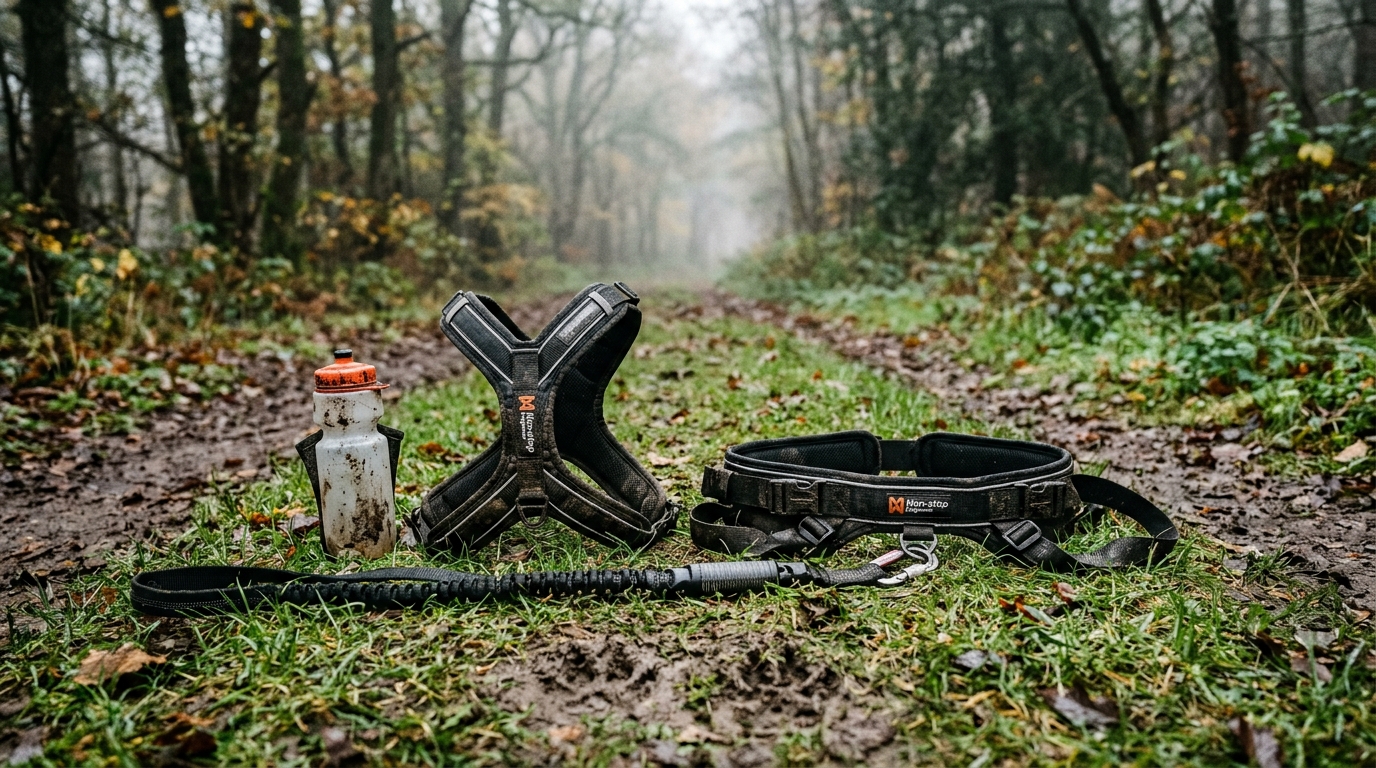
Getting dragged through a muddy trail by a 15kg dog in the wrong gear is a miserable way to spend a Sunday morning. The absolute minimum you need to canicross safely is three pieces of specialised kit: a proper pulling harness, a waist belt with a bungee loop, and a shock-absorbing bungee line. Get these right, and you protect both your back and your dog’s neck. Get them wrong, and you’ll end up wasting money on gear that rubs, slips, or snaps under pressure.
What Exactly Do You Need for Canicross?
You cannot safely canicross with a standard walking harness or lead. To get started without risking injury, you need three specific pieces of gear: a dedicated pulling harness, a waist belt with a bungee attachment, and a shock-absorbing bungee line.
These three items form the core kit. They protect both you and your dog from sudden pulls, provide control, and keep the run comfortable. A proper harness allows your dog’s shoulders to move freely while pulling, whereas a walking harness will restrict them and easily slip off. The waist belt sits low on your hips to protect your lower back from the sudden jolt of a dog spotting a squirrel. Finally, the bungee line acts as a shock absorber between you both. Without this specific setup, you risk neck strain for your dog and back pain for yourself.
Here is a closer look at why each piece matters:
- Pulling Harness – This is a dedicated canicross harness, not an everyday walking one. Front‑clip models give you control; back‑clip versions let the dog pull more naturally. A standard walking harness can slip off mid-run, tangling the lead and ending the session early. The Royal Kennel Club advises that a proper active harness should allow full shoulder movement without restricting the dog’s airway.
- Waist Belt – You need a belt that wraps around your hips and includes a dedicated lead ring and a bungee attachment point. A regular running belt lacks the reinforcement needed for the sudden pull of a dog, and the missing ring means you can’t attach a bungee line securely. The Non-stop CaniX belt, for example, is shaped to take strain off your lower back on longer runs.
- Bungee Line – This is a shock‑absorbing bungee lead with a swivel clip. A plain lead transmits every jerk straight to your dog’s neck, which can cause choking or neck strain. The bungee line softens those forces, and the swivel prevents the line from twisting around the dog’s body.
Must‑have vs. nice‑to‑have checklist
- Must have: pulling harness (front or back clip), waist belt with bungee loop, bungee line with swivel.
- Nice to have: traffic handle on the belt, reflective stitching on the harness, extra padding for long‑distance comfort.
For more advice on getting the basics right, browse our blog.
Small Dogs vs. Large Breeds
If your Border Collie mix is 15 kg, you sit in the small‑dog zone where a few tweaks make a world of difference.
- Line length – Small dogs benefit from a 3–5 m bungee line. A longer line can lift them off the ground when they surge, making balance difficult. Large dogs can handle the standard 5–8 m length without losing footing.
- Attachment point – Look for a harness with a lower front‑clip (e.g., the Zero DC Short) to keep the pull line close to the dog’s centre of gravity. Larger breeds perform better with a higher front‑clip that offers more leverage.
- Fit sensitivity – Small dogs are more prone to chafing. A snug, well-adjusted harness prevents rubbing under the armpits, which is especially important on longer runs.
| Size | Recommended line | Harness tip |
|---|---|---|
| Small (≤ 10 kg) | 3–5 m | Low front‑clip, lightweight material |
| Medium (10‑25 kg) | 4–6 m | Standard front‑clip, check for rubbing |
| Large (> 25 kg) | 5–8 m | Higher front‑clip, reinforced stitching |
The “Try Before You Buy” Strategy
The easiest way to avoid buying the wrong kit is to test it first. Most UK canicross clubs run taster sessions and keep spare belts, lines and even a few harnesses on hand for newcomers. Paws4Running (paws4running.co.uk) offer taster sessions where you can try out canicross kit before buying — many UK clubs operate similarly.
Gear fit is highly personal. A belt that feels snug on a 70 kg runner may sit loose on a slimmer 55 kg runner, and a harness that’s perfect for a deep‑chested Labrador could rub a smaller Border Collie’s armpits. Borrowing lets you spot those issues before you spend a few hundred pounds. If you need help finding a local group, get in touch and we can point you in the right direction.
Common Mistakes to Avoid
One mistake you’ll see time and again is reaching for a standard lead. With no stretch, it snaps back and jolts the dog mid-run. The other classic is buying a walking harness: it isn’t built to be pulled in and can slip off when the dog accelerates.
Other pitfalls:
- Ignore fit – Rubbing, especially under the armpits, is a recurring gripe. If the harness leaves red marks after a short jog, it will only get worse. The RSPCA highlights that any exercise equipment should never cause pain or alter a dog’s natural gait.
- Buy premium gear too early – Jumping straight to a £150 specialist harness when a £45 entry‑level model will do for a beginner adds unnecessary cost.
- Overlook the bungee line – With a static lead, every sudden tug goes straight into the dog’s shoulders and your lower back. The elastic section takes the jolt out.
Budget‑Friendly Kit Options
If you’re watching the pennies, there are sensible entry‑level choices that still keep you safe.
- A cheap walking harness for the first few weeks – A budget no-pull harness with chest and back rings (TrueLove’s Front Line is a common one) is fine while you’re walking and starting to jog. It isn’t designed for a dog to pull you, though, so plan to move to a proper canicross harness once your dog starts running out front.
- Neewa Canicross Belt – around £40. A simple design with leg loops and a ring at the front for the line, though the ring can slide if the belt isn’t tightened snugly.
- Neewa Bungee Line – approximately £25–£35. Provides decent shock absorption for dogs that change pace quickly. The main downside is occasional missing hardware on first delivery, which most sellers resolve quickly.
These budget picks give you the essential core kit without the premium price tag of a Non‑stop Freemotion harness or a Ruffwear Omnijore joring system (paid link) system. If you later find you need more durability or specialised features, you can upgrade without feeling ripped off.
See Ruffwear Omnijore joring system on Amazon → (paid link)
Step‑by‑Step Setup & First Run
Now that the kit is sorted, here’s how to get it on and hit the trail.
- Fit the harness – Slip the harness over the dog’s head, tighten all adjustment straps until it’s snug but still allows two fingers to slide under the chest strap. Check for rubbing after a short walk; if it chafes, adjust the fit before anything else.
- Attach the belt – Position the waist belt around your hips, fasten the buckles, and adjust until it feels secure without digging into your ribs. The lead ring should sit at the centre of the belt, not off to the side.
- Connect the bungee line – Clip the swivel onto the belt’s bungee loop, then attach the other end to the harness’s front‑clip. Ensure the line has a little slack but isn’t so loose that it loops around the dog’s legs.
- First run protocol – Start with a 1 km jog on a flat, low‑traffic path. Let the dog set the pace; you’re there to follow, not to lead. Use the traffic handle on the belt for quick control in busy areas.
- Safety check – After the run, inspect the harness for any red marks or hair loss, and check the bungee for signs of wear. If anything feels off, tighten the harness or consider a different size before the next outing.
A concise first‑run checklist: harness snug, belt secure, bungee attached, short route, post‑run inspection.
Quick Answers
Do I need a special harness for canicross?
Yes. Standard walking harnesses restrict shoulder movement and don’t provide the attachment points required for pulling. A dedicated pulling harness with a front‑clip (or back‑clip for experienced dogs) matters for safety and performance.
Can I use a regular running belt?
No. A regular running belt lacks the specific lead ring and bungee attachment needed for canicross. You need a waist belt designed for the sport, which distributes the pull safely across your hips rather than your lower back.
What length bungee line should I get?
For large dogs, 5–8 m is standard. Small dogs benefit from a shorter 3–5 m line to keep them grounded and maintain balance during sudden acceleration.
Is canicross safe for all dogs?
Generally yes, but you should wait until your dog is fully grown to protect their developing joints. It’s always a good idea to check with your vet, especially if your dog is older or has any underlying health issues. Start with short, easy runs and build fitness gradually.
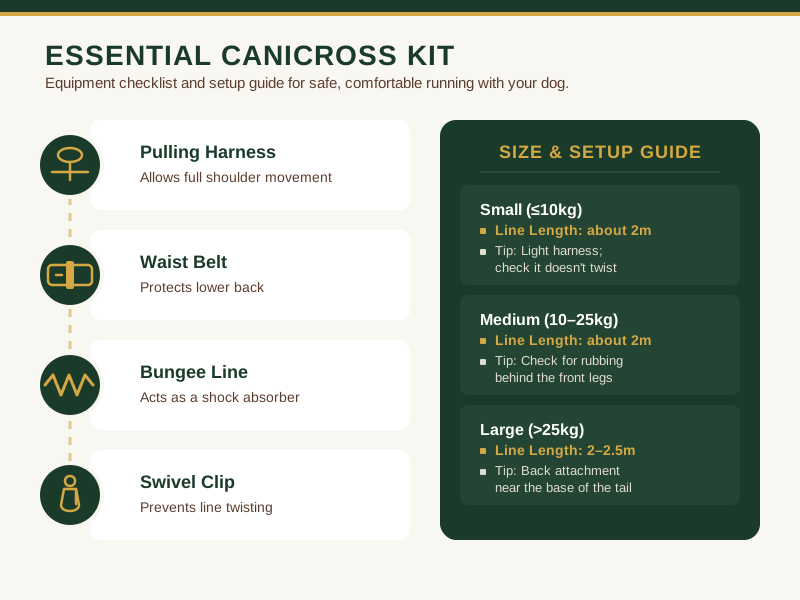
Canicross Kit Size Guide
| Dog Size | Recommended Line Length | Harness Tip |
|---|---|---|
| Small (≤10kg) | About 2m | Light harness; check it doesn’t twist sideways |
| Medium (10–25kg) | About 2m | Check for rubbing behind the front legs |
| Large (>25kg) | 2–2.5m | Reinforced stitching; attachment near the base of the tail |
What to Do Next
You now have the definitive starter checklist: a pulling harness, a waist belt with a bungee attachment, and a shock‑absorbing bungee line, all fitted correctly for your dog’s size. Remember the small‑dog tweaks, borrow kit before you buy, and steer clear of standard leads and walking harnesses.
If you’re ready to make a confident purchase, start with the budget‑friendly options above or visit a local club for a test run. And if you want the full kit list in one place before you spend a penny, Get the Free Canicross Starter Checklist – it spells out exactly what to buy first and what you can safely leave for later.
Running with your dog should feel like freedom, not a gamble. With the right kit and a bit of preparation, you’ll be turning heads on the trail in no time. Happy canicrossing!
Related Guides
For a complete overview, see our How to Start Canicross: A UK Beginner’s Guide.
References
As an Amazon Associate we earn from qualifying purchases.
Note: General guidance only, verify details with a qualified professional or official source.