Can I Run With My Dog in the UK? (The Legal & Etiquette Guide)
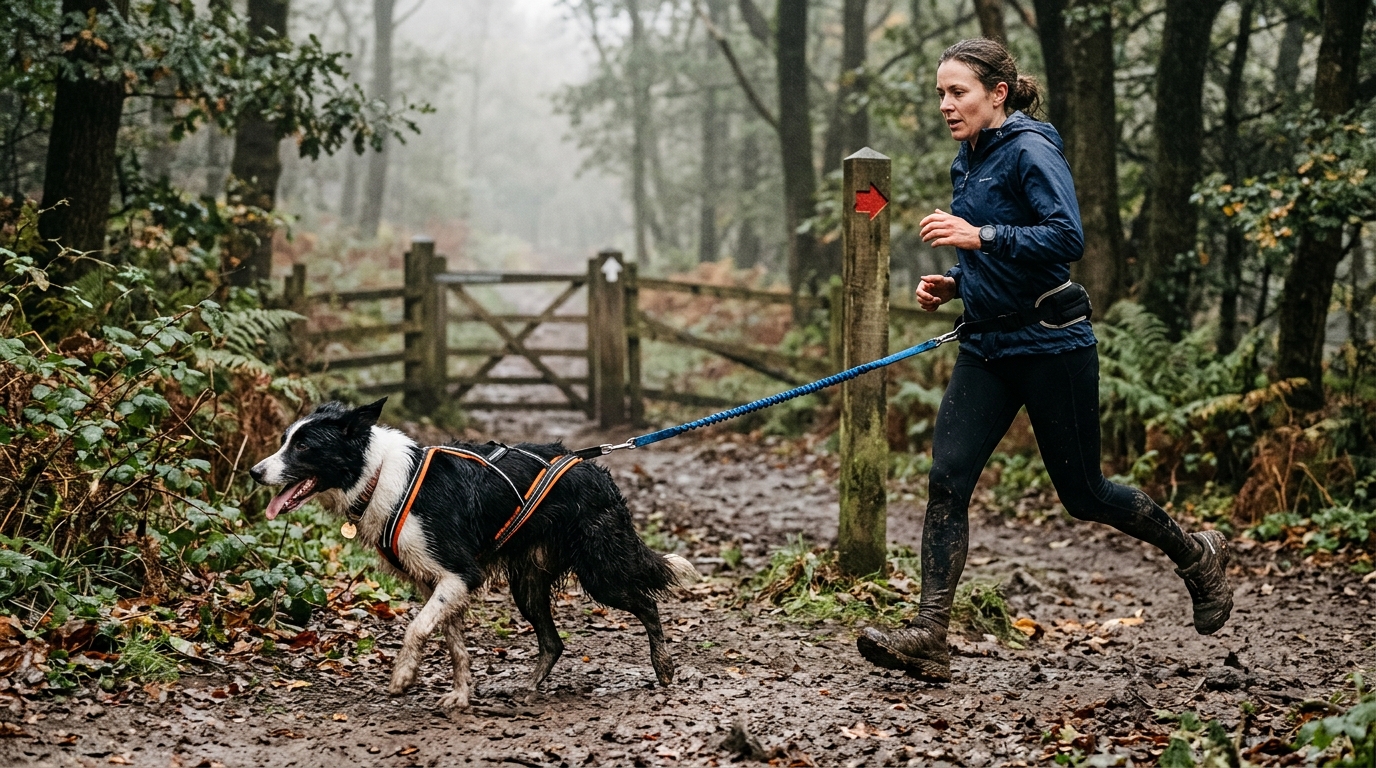
Figuring out where you can legally run with your dog in the UK is a bit of a minefield. The anxiety of trespassing or getting a nasty stare from a landowner is enough to put many off canicross entirely. The rules aren’t uniform—they depend entirely on whether you are in England, Wales, or Scotland. Knowing the difference between a footpath and open access land is what keeps you on the right side of the law and in the good books of other trail users.
What Are the Legal Rules for Running With Your Dog in the UK?
In England and Wales, you must stick to designated public rights of way—such as footpaths and bridleways—and keep your dog under control at all times, as outlined by the Countryside Code. In Scotland, the rules are different. The Scottish Outdoor Access Code grants a much broader right to roam across most land, provided you act responsibly and avoid disturbing livestock or wildlife.
The biggest misconception among new runners is that the “right to roam” in England and Wales gives blanket access everywhere. Under the Countryside and Rights of Way Act 2000, open access land permits walking, running, and climbing — but not cycling or horse riding. Whether canicross (running with a dog in harness) counts as permissible running on open access land is not explicitly addressed in law — if in doubt, stick to designated footpaths or check with the relevant land authority.
One open access rule is clear, and it catches a lot of runners out: between 1 March and 31 July, dogs on open access land must be on a lead of no more than two metres, and at any time of year near livestock. Some grouse moors also exclude dogs altogether under longer-term directions, so read the signs at the access point.
| Region | Core legislation | What it covers for canicross |
|---|---|---|
| England & Wales | Countryside Code | Must stick to footpaths/bridleways; dogs under control; respect horses |
| Scotland | Outdoor Access Code | Wider access but still “responsible use” – no reckless pulling on open land |
Open access land surprises a lot of people because it comes with restrictions. The official GOV.UK guidance confirms you can walk and run on open access land, but cycling and horse riding are not permitted. Always check for any seasonal closures or local bylaws before heading out.
Where You CAN Run: Rights of Way & Open Access
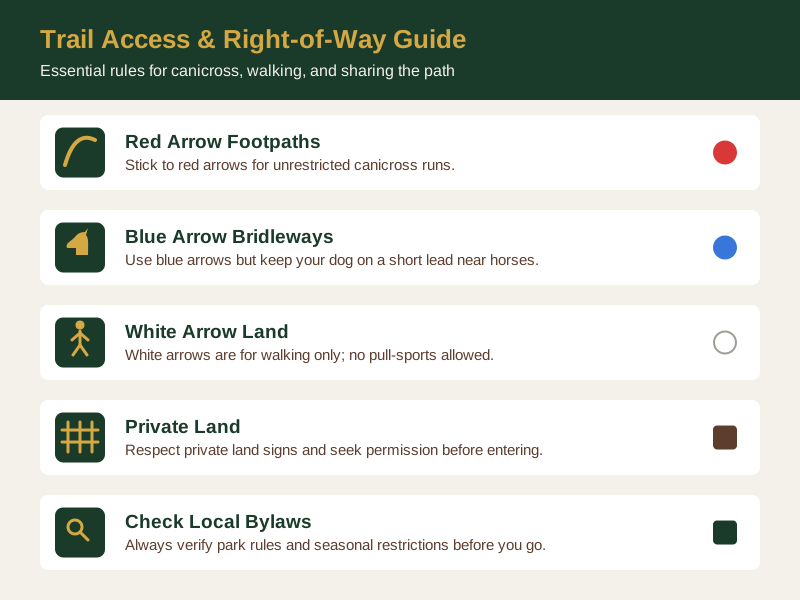
The first thing to spot on a map is the coloured arrow system used by Ordnance Survey. Yellow arrows mark public footpaths – the most common legal route for canicross. You can run here, provided you respect any specific “no dogs” signs. Blue arrows indicate public bridleways, which are open to walkers, cyclists, and horses. When you encounter a horse, you must give way and keep your dog on a short lead. Open access land is shown as a yellow-shaded area on OS maps.
A typical mistake new runners make is assuming that a white‑arrow area is a free‑for‑all playground. The reality is that any pull‑sport on this land is a breach and can lead to a ban from the area.
Here is what you need to know for a legal run:
- Stick to yellow-arrow footpaths for unrestricted canicross.
- Use blue-arrow bridleways but always stop for horses and keep your dog leashed.
- On open access land, running is permitted but cycling and horse riding are not — check local bylaws for any restrictions. Most of the UK’s countryside trail network is a patchwork of these arrows. Knowing which colour you’re on saves you from a lot of faff and potential fines.
Where You CANNOT Run: The “No” Zones
Private Land
If a gate bears a “Private Land – Keep Out” sign, you’re not allowed to run there without explicit permission. Owners often appreciate a quick knock on the door or a polite email; ignoring the sign can lead to a trespass warning or a hefty fine.
National Parks
National Parks are a common hotspot for canicross, but each park sets its own bylaws. For example, some upland areas restrict dogs on access land during the bird breeding season or on grouse moors, and some trails ban cycling outright. Always check the National Parks UK site for the specific area you plan to visit.
Forestry England
Many forests allow dogs on leashes but restrict them during nesting season or in areas earmarked for timber harvesting. Forestry England sites each post specific signs about dog restrictions — check the signage at the entrance and follow any lead or exclusion area notices posted on site.
Schools & Playing Fields
These are private premises with strict access rules. Even if a path runs alongside a school field, you cannot cut across it without permission.
The red‑flag warning: always look for local bylaws on the park’s official website or the Forestry England site before you head out. Ignoring them is a quick way to get a stern warning, and it does nothing for the community’s perception of canicrossers.
Canicross Etiquette: Passing Other Users
Running with a dog adds a layer of complexity to the usual trail etiquette. These are the biggest friction points:
Passing Horses
- Spot the horse from a distance.
- Slow down and come to a complete stop.
- Put your dog on a short lead (no longer than a metre).
- Ask the rider politely if it’s okay to pass.
- Wait for a clear signal before moving ahead.
The stop-and-lead routine is what turns a shouted warning into a friendly nod, so don’t skip a step.
Passing Cyclists
Ring your bell early, stay on the right side of the path, and reduce speed. If a cyclist is overtaking you, give them space – they’re often travelling faster than you expect.
Passing Walkers
A quick “Hello” and a wide berth (at least a metre) usually does the trick. Most walkers appreciate the heads‑up, especially if your dog is a bit excitable.
Dogs Off‑Leash
While the Countryside Code permits off‑leash running on footpaths, you must keep your dog under control at all times. That means no chasing livestock, no lunging at wildlife, and an instant recall if another user approaches.
A smooth run isn’t just about speed – it’s about making other users feel safe. A polite runner keeps the trails open for everyone else.
Gear & Compliance: Why Harnesses Matter
A proper canicross harness does more than attach the dog to your belt; it’s a safety device for both of you. A pulling harness with the attachment on the dog’s back keeps the line straight behind the dog and the load off its neck. You’re looking at roughly £40–£80 for a decent setup.
- The Harness: Look for a pulling harness with the attachment on the back and padded straps. The Non-stop Dogwear Freemotion is a specialist pulling harness with no handle, so it isn’t the one for casual walks.
- The Belt: A waist belt distributes the pull evenly across your hips, preventing back strain. The Non-stop CaniX Belt is light (about 280 g in size M) and shaped to take strain off the lower back.
- Visibility: Reflective strips on both harness and belt are worth having for low‑light conditions, especially on rural footpaths where streetlights are rare.
- Waste Management: Carry a poop bag at all times. Leaving waste not only breaches the Countryside Code but also fuels the stereotype that dog runners are a nuisance.
If you’re watching the price, the Zero DC Short Harness offers a lightweight, adjustable alternative for deep‑chested dogs, but the fit is sensitive – you’ll need to measure carefully to avoid chafing.
How to Check if a Trail is Legal for Canicross
1. Check the Ordnance Survey map Before you leave the house, look at the OS map for your planned route. You are looking specifically for yellow arrows (footpaths) or blue arrows (bridleways), as these are your legal rights of way for running.
2. Verify local park bylaws If your route cuts through a National Park or Forestry England land, check their official website. Local bylaws trump general rights of way, and seasonal restrictions (like grouse shooting or timber harvesting) are strictly enforced.
3. Look for gate signage When you arrive, read the signs on the gates. A “Private Land” or orange “No Dogs” sign means you need to find an alternative route immediately, regardless of what your digital map suggested.
4. Assess the livestock situation Even on a legal footpath, if you spot sheep or cattle in the field ahead, put your dog on a short lead before entering, as the Countryside Code advises. Livestock worrying is a criminal offence, and since the Dogs (Protection of Livestock) (Amendment) Act came into force in March 2026 the fine is unlimited and the offence covers roads and paths as well as fields. In some circumstances, a farmer may lawfully shoot a dog that is worrying livestock. Cattle with calves are the other real danger: if cows come at you, let go of the dog and get yourself out of the field.
Common Questions
Can I run with my dog on private land?
No. Unless you have explicit permission from the landowner, running on private land is trespassing. Always look for “Private Land” signs and, if in doubt, ask the owner before you start or find a public footpath.
Is it legal to cycle on footpaths in the UK?
Generally, no. In England and Wales, cyclists must stick to bridleways and byways. Scotland is more permissive, allowing cycling on most paths, but you still need to respect any local restrictions and give way to walkers.
Do I need to keep my dog on a lead in the countryside?
Not always on public footpaths, but the dog must be under close control at all times, and the Countryside Code asks you to use a lead around livestock. On open access land a lead of no more than two metres is a legal requirement from 1 March to 31 July and near livestock all year. In practice, lead up when passing horses, livestock or anyone nervous of dogs.
UK Trail Running: Legal Route Types
| Route Type | Colour Code | Permitted Activities | Dog Restrictions |
|---|---|---|---|
| Public Footpath | Yellow Arrow | Walking, running, canicross | No dogs on lead required unless livestock present |
| Public Bridleway | Blue Arrow | Walking, cycling, horse riding | Keep dog on short lead when passing horses |
| Open Access Land | Yellow shading (OS maps) | Walking and running permitted; not cycling or horse riding | Check local bylaws for pull-sport restrictions |
| Private Land | Private Signage | None (without permission) | N/A |
| National Parks | Varies by Park | Check specific bylaws | Seasonal restrictions may apply (e.g. grouse shooting) |
Ready to Start?
You now have the legal map, the etiquette checklist, and a clear idea of the gear that keeps you and your dog safe on the trail. The next step is to put this knowledge into practice: plan a run on a red‑arrow footpath, double‑check any local bylaws, and make sure your harness and belt are snug and visible.
Running with your dog should feel liberating, not stressful. By respecting the law, keeping to the right paths, and following the etiquette tips above, you’ll help keep the trails open for everyone and enjoy countless miles of happy, legal canicross.
Related Guides
For a complete overview, see our How to Start Canicross: A UK Beginner’s Guide.
References
Note: This guide provides general information based on current UK legislation. Always verify local bylaws and specific site rules before heading out, as restrictions can change.