Best Dog Cooling Vests UK for Summer Trails
As an Amazon Associate we earn from qualifying purchases. This page contains affiliate links — if you buy through them, we earn a small commission at no extra cost to you.
When the Met Office issues an amber heat warning, a steep canicross run can become dangerous in minutes. Dogs overheat faster than they can cool down, and on a muggy 25°C trail, hydration alone isn’t enough to prevent heatstroke. A proper cooling vest is a safety net, pulling heat away from your dog’s body to keep them comfortable and safe.
Here, we’ll look at how the two main cooling technologies actually work, why the Ruffwear Swamp Cooler (paid link) is the go-to for UK trails, and when a cheaper vest will do the job.
Buy Ruffwear Swamp Cooler on Amazon → (paid link)
Quick picks
- Best overall: Ruffwear Swamp Cooler — three-layer evaporative, durable, harness-compatible
- For walks and short outings: a lighter evaporative vest — cheaper, less mesh, fine for gentle activity
- Remember: a vest goes over your dog's harness, it doesn't replace it
How Do Dog Cooling Vests Actually Work?
Dog cooling vests work by drawing excess heat away from your dog’s body, usually through evaporation. You soak the vest in cold water, and as the water evaporates, it pulls thermal energy away from the skin. In humid UK conditions, evaporative mesh vests perform best, provided there’s airflow while the dog moves.
| Technology | How it cools | Best for | UK‑specific quirks |
|---|---|---|---|
| Evaporative (water‑soaked mesh) | Water evaporates from the fabric, taking heat with it. | High‑intensity running, steep climbs. | Humidity slows evaporation, so a vest with plenty of mesh surface is a must. |
| Phase‑Change Materials (PCM) (gel crystals) | Crystals absorb heat while melting, then release it slowly as they solidify. | Low‑intensity walks, static activities (e.g., beach day). | Less effective when a dog is panting heavily; the crystals can stay “cold” for only about an hour before warming up. |
On a muddy UK trail, an evaporative vest usually beats PCM. The mesh lets water drain away from mud, and constant movement speeds evaporation even in damp air. Once the mesh is clogged with mud, though, the cooling effect drops sharply, so rinse it after muddy runs.
So, if you’re planning a 10 km canicross run in 25 °C heat, look for a vest with wide‑area, quick‑dry mesh and a simple soak‑and‑go system.
The Ruffwear Dominance & Mechanics
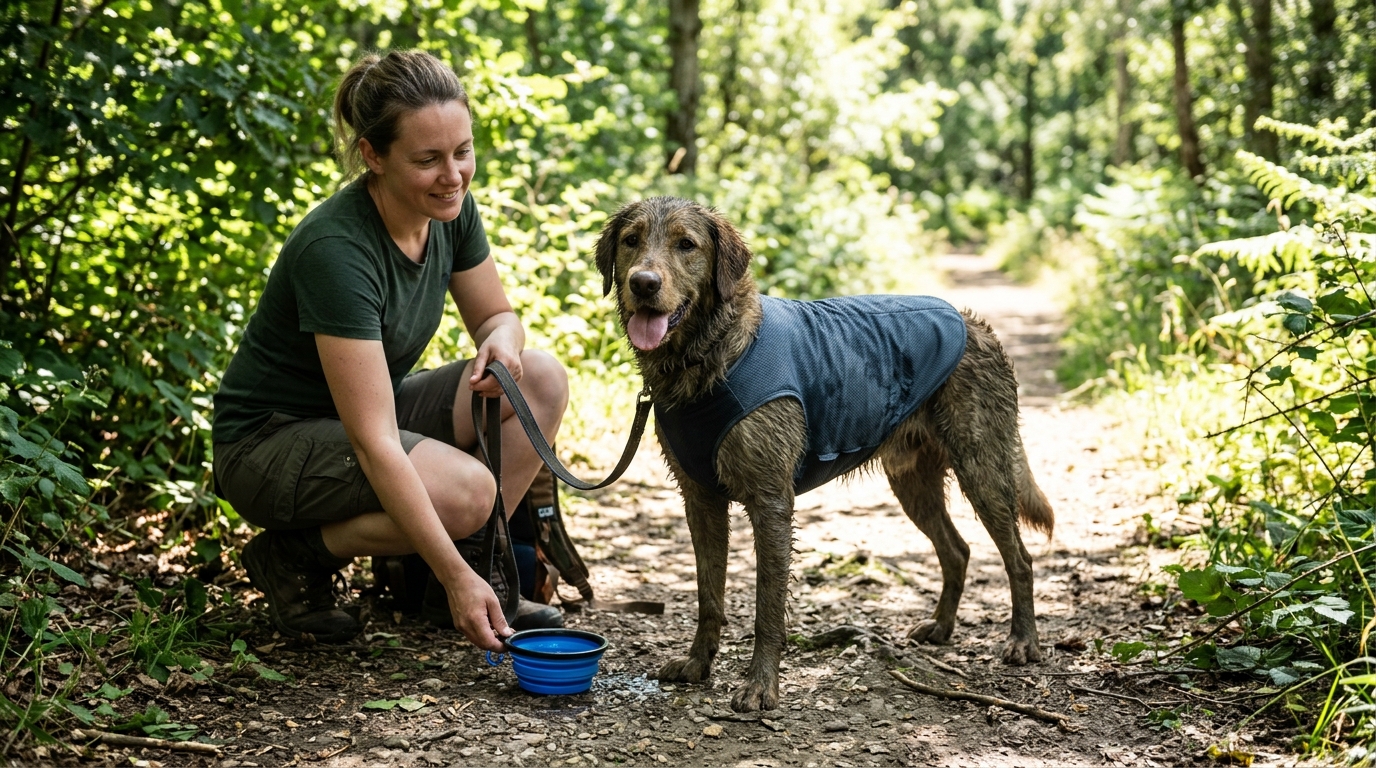
Ruffwear’s Swamp Cooler is the benchmark for active dogs on UK trails. It’s a three-layer evaporative vest: soak it, wring it out, and as the water evaporates from the outer layer it draws heat away from the dog. It fastens with side-release buckles and has a portal for the harness or lead, so it goes on over a running harness.
Why it dominates:
- Durability – It copes with mud, brambles and grit, which matters if the vest goes on every summer run.
- Harness integration – The harness or lead comes through a portal in the back, so you don’t have to swap kit mid-run.
- Coverage – It covers the back and sides (SPF 50+ on the listing), so more wet surface is working for the dog, which matters in UK humidity.
The downside is bulk. The vest is a bit chunky, and it can take a minute or two to fully soak before it reaches peak cooling. If you need something lighter for short bursts, a slimmer option may feel more comfortable, but you’ll sacrifice the long‑run cooling performance that makes the Swamp Cooler the go‑to for serious trail work.
Ruffwear’s official product page explains the cooling mechanics in detail — Swamp Cooler™ Cooling Dog Vest.
Worth knowing: Mud clogs the outer layer and slows evaporation, so rinse the vest with a garden hose before you soak it again.
Which Cooling Vest to Buy
A cooling vest isn’t a harness, and you shouldn’t buy one hoping it will do both jobs. If your dog pulls, it wears its normal canicross harness, and the vest goes over or round it, with the line attachment left clear. That narrows the choice down quickly.
For running and long trail days: Ruffwear Swamp Cooler
The Swamp Cooler is the one most canicross runners end up with, for the reasons above: a large evaporative surface, a fit that stays put at speed, and room for a harness underneath. It’s bulkier than budget vests and takes a minute to soak properly, and the sizing runs generously, so measure your dog’s chest girth against Ruffwear’s chart rather than guessing. Expect to pay roughly £60–£80 depending on size and retailer.
Check the Ruffwear Swamp Cooler on Amazon → (paid link)
For walks and short outings: a lighter evaporative vest
For a pub walk or an hour on the beach, you don’t need Ruffwear’s durability. Lighter, cheaper evaporative vests from brands such as Lautus and Bamda (on the shelf below) do the basic job of a wet layer that cools as it dries. The trade-off is less mesh, thinner fabric and patchier sizing, so they dry out sooner and suit gentle activity rather than running.
What to skip
- Gel or “phase-change” vests for running. They cool well at rest but warm up quickly against a hard-working dog, and they’re heavy.
- Anything that covers the harness attachment. If you have to unzip the vest to clip the line on, it’ll get left at home.
- Vests sized only by weight. Chest girth is what matters; two 20 kg dogs can need different sizes.
Whatever you buy, it’s a help, not a licence to run in the heat. The safety section below still applies.
UK‑Specific Buying Guide
When you’re hunting for the right vest, a few UK‑centric factors can make or break your purchase.
- Measure the girth, not just the weight. British breeds vary widely – a Jack Russell’s chest is far narrower than an English Springer Spaniel’s. Use a flexible tape to measure around the ribcage at the widest point, then add a few centimetres for comfort.
- Check harness compatibility. Most active vests have a front D‑ring or zip that sits over the harness’s pull point. If the vest blocks the D‑ring, you’ll lose pulling efficiency on a canicross run.
- Prioritise mesh breathability. In the UK’s humid summer, a vest with large, open‑weave panels lets evaporation happen faster. Look for “full‑body mesh” in the description.
- Beware of US sizing charts. Many brands list US sizes that run small for UK dogs, leading to costly returns. Check your dog’s measurements against the brand’s own chart before you order.
A well-fitted vest with ample mesh will keep a dog cooler longer than a higher‑priced vest with dense, non‑breathable fabric. If you’re on a £50‑£80 budget, focus on mesh coverage and proper fit rather than brand prestige. If you’re struggling to figure out the right fit for your breed, feel free to get in touch with us.
Maintenance & Care – The “Muddy UK” Factor
A cooling vest on a muddy trail picks up soil, grass, and sometimes small stones. Proper care keeps the cooling performance intact.
- Rinse before washing. A vest stops cooling well once mud clogs the fabric. Give the vest a thorough rinse with a garden hose or bucket before tossing it into the washing machine.
- Air‑dry only. The fabric absorbs water quickly, but UK rain means it can stay damp for days. Hang the vest in a well‑ventilated area, away from direct sunlight – tumble dryers can melt the PCM crystals or shrink the mesh.
- Store in a dry spot. A damp cupboard encourages mould growth, which not only smells bad but can degrade the cooling material.
- Check the zip and straps. Mud can jam zippers; a quick wipe with a damp cloth after each run keeps zips and buckles working.
The common mistake is skipping the pre‑wash rinse, assuming the machine will handle the grit. That oversight leads to a vest that “doesn’t cool” after a few washes – a simple step that saves you money and frustration. You can find more gear maintenance tips in our blog index.
How to Prep and Fit a Cooling Vest for the Trail
Step 1: Soak the vest thoroughly Submerge the vest completely in cold tap water for about a minute. You want the fabric fully saturated so the inner layers absorb as much water as possible. Wring it out just enough so it isn’t dripping heavily down your dog’s legs.
Step 2: Align the harness and zip Slip the vest over your dog’s head and align the front panels with their chest. If you use a pulling harness underneath, ensure the vest’s zip or access hole lines up perfectly with the D-ring so the canicross line attaches without snagging the fabric.
Step 3: Check the two-finger rule Fasten the clips or zip it up, then slide two fingers between the vest and your dog’s ribcage. It needs to be snug enough to maintain contact with the body for efficient cooling, but loose enough that it doesn’t restrict deep breathing on a steep climb.
Step 4: Top up on the go As you run, the vest will naturally dry out. Carry an extra water bottle and pour it directly over the mesh panels every 30 to 40 minutes to reactivate the cooling effect without needing to take the vest off.
Safety Warning – When a Vest Isn’t Enough
A cooling vest is a tool, not a cure‑all. The RSPCA warns that dogs can succumb to heatstroke in a matter of minutes, especially if exercising in warm weather.
- Hydration and rest are non‑negotiable. Even with a vest, a dog needs fresh water every 15‑20 minutes on a hot run.
- Watch for overheating signs: excessive panting, bright red gums, drooling, or lethargy. If any appear, stop, offer water, and move to shade immediately.
- The “shade rule”: if it feels too hot for you in shorts, it’s too hot for your dog.
- Short‑nosed breeds need extra vigilance. Bulldogs and Pugs overheat faster; a vest helps but doesn’t replace close monitoring.
For safe temperatures and the warning signs of heatstroke, see our guide to running with your dog in hot weather, and for how much water to carry, our trail hydration guide.
Quick Answers
Do cooling vests actually work?
Yes, they work, provided you use the right type for the activity. Evaporative vests lower your dog’s surface temperature significantly during movement because airflow drives evaporation. However, if the air is completely stagnant or the vest dries out, they stop cooling and can actually trap heat.
Can I put ice in a cooling vest?
No, avoid using direct ice. Placing ice against a dog’s skin restricts blood vessels, which actually slows down their body’s natural ability to shed heat. Simply soaking the vest in cold tap water is the safest and most effective way to activate it.
How do I know if my dog is too hot?
The clearest signs are heavy, frantic panting, bright red or pale gums, excessive drooling, and a sudden lack of coordination. If your dog starts lagging behind or seeking shade, stop immediately. Offer them water and cool their paws and belly, rather than forcing them to keep walking.
Are cooling vests safe for short-nosed breeds?
They are safe to use, but you cannot rely on them entirely. Brachycephalic breeds like Pugs and French Bulldogs struggle to pant effectively, making them highly vulnerable to heatstroke. A vest provides some surface cooling, but you must still strictly limit their exercise during hot weather.
Ready to Start?
You now have a clear picture of which cooling vest suits your trail style, how to size it for a UK dog, and how to keep it performing season after season. The Swamp Cooler remains the top pick for demanding runs, while a lighter vest is fine for gentle outings. Remember to rinse off mud before washing, stay hydrated, and always watch for heat‑stress signs.
Ready to lock in the right gear and stay ahead of the heat? Get the Free Canicross Starter Checklist – it covers the kit and the safety checks for every run.
Stay safe, stay cool, and enjoy those summer hikes with confidence. Happy trails!
Related Guides
For a complete overview, see our Essential Dog Trail Gear UK: What to Pack.
Where I Learned This
As an Amazon Associate we earn from qualifying purchases.
Note: general guidance only, verify details with a qualified professional or official source.